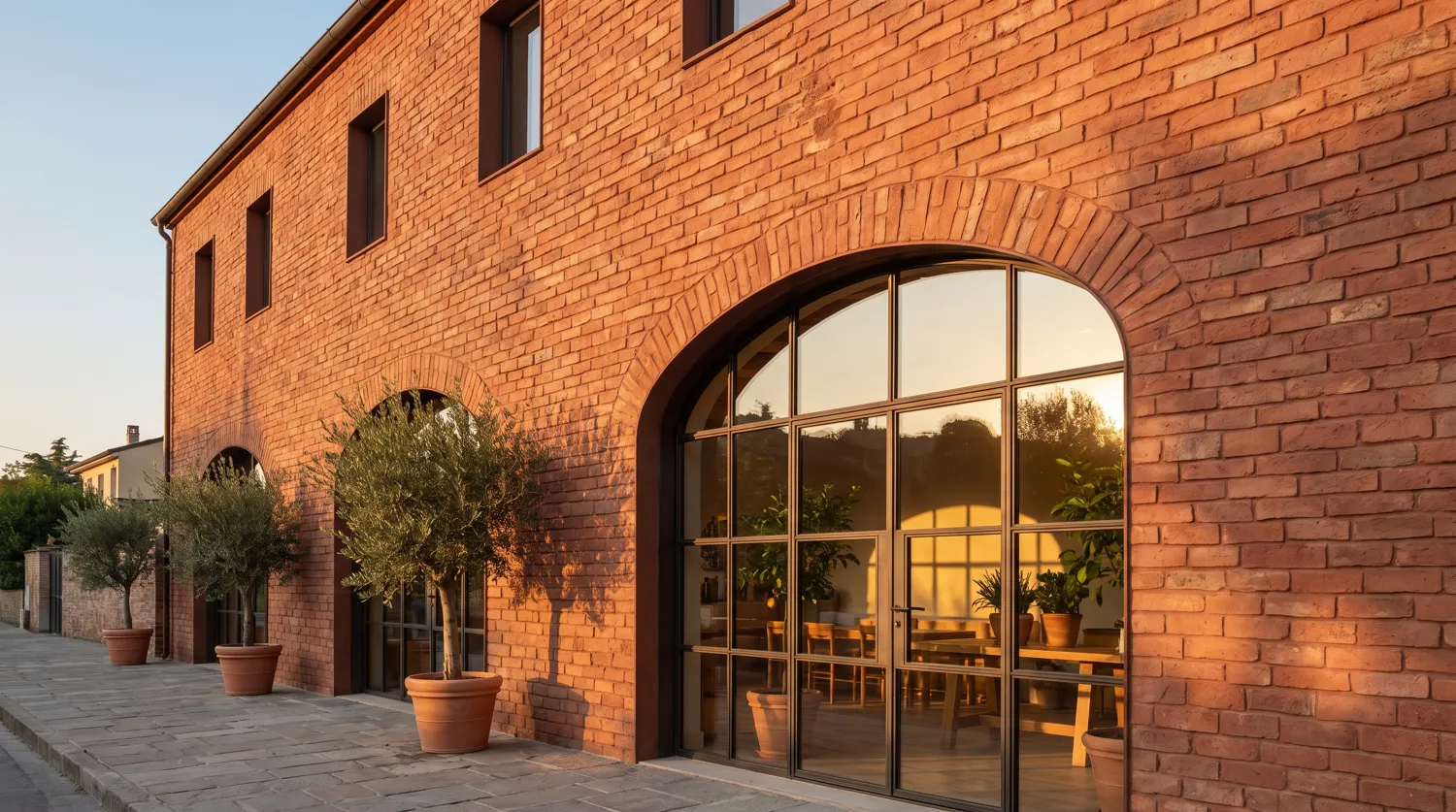
A1 non-combustible facade materials: what to look for
What a Class A1 fire rating actually covers on a facade, how it differs from A2 and B, and the questions to ask about adhesives, insulation and documentation.
Why fire class matters more on a facade
Inside a building, fire usually meets walls, ceilings and contents in a limited space. On the outside, a combustible facade can carry flame upward and sideways, past floors and windows, and drop burning material to the ground. That is why facade materials are looked at more strictly than many interior finishes, and why fire class is now a standard question from developers, insurers, hotel operators and architects.
It is also a practical sales question. Villas and hotels in Bali and across Indonesia are increasingly specified with attention to safety, and a facade that does not feed a fire is a concrete argument for owners and guests.
What Class A1 means
In the European reaction-to-fire system (EN 13501-1), the classes run from A1 and A2, which are non-combustible or of very limited combustibility, down through B, C, D and E to F. A1 is the top class: the material does not burn and does not contribute to a fire at any stage. In everyday terms, it is stone-like behaviour.
- A1: non-combustible; no contribution to fire.
- A2: limited combustibility; small contribution under test conditions.
- B to F: increasing combustibility, and in some cases flaming droplets or smoke.
When a supplier says "fire-rated", ask which class, to which standard, and for which exact product.
Five things to check besides the headline class
- The exact product and series. Fire class belongs to a tested product, not to a brand or a catalogue. Different collections from one supplier can behave differently.
- The whole system. A facade is a build-up: substrate, adhesive, insulation, cavity, cladding, coatings. One combustible layer can change the outcome.
- The adhesive. A non-combustible panel on a thick layer of flammable glue is not the same as the panel alone. Ask what adhesive is recommended and what its fire data is.
- Coatings and finishes. Some A-class bodies are painted or sealed with organic coatings. Ask whether the rating is for the finished surface.
- Documentation. Ask for the test report or classification document for the specific series, and check that it matches the product you will receive.
Where flexible ceramic sits
Flexible ceramic, also sold as MCM, flexi stone or soft stone, is made from natural stone powder and a modified mineral binder. Because the composition is mineral rather than plastic, the core flexible stone collections carry a Class A1 rating: the panels do not burn or support combustion, which allows use on facades and escape routes. The panels also release no formaldehyde.
The A1 rating applies to the flexible stone collections only. Other materials in the range, such as PU stone (polyurethane) or resin decorative panels, are different products, and their fire behaviour must be checked separately. When you request a quotation, name the series and ask for the documentation that applies to it. More background is in the FAQ and the guide to the material.
Common materials and their general fire behaviour
This is a general orientation. The result for any real product depends on its test data.
| Material | General behaviour | Point to verify |
|---|---|---|
| Natural stone, ceramic, porcelain | Non-combustible | Fixings, adhesive and weight |
| Cement render, mineral plaster | Non-combustible | Paint and insulation behind |
| Timber cladding | Combustible | Treatment, spacing, cavity |
| Aluminium composite panels with plastic core | Core can be combustible | Core type and class |
| Polyurethane or resin panels | Often combustible | Fire class of the exact product |
| Flexible stone (mineral) | Class A1 (core flexible stone collections) | Adhesive and substrate |
Common misunderstandings about fire ratings
- "Non-combustible means fireproof." Not exactly. A1 describes how the material reacts to fire: it does not burn or feed the flames. How long a whole wall assembly keeps its strength and keeps flames out is a different measure, called fire resistance, and it depends on the entire wall.
- "The brochure rating covers the whole facade." It covers the tested product. Adhesives, insulation and coatings added on site have their own behaviour.
- "A thin panel must be weak." Thickness and reaction to fire are unrelated. A thin mineral sheet can be non-combustible, while a thick plastic panel may not be.
- "Fire class is the only safety question." Escape routes, detection, compartmentation and sprinklers are decided at building level, and the facade is one part of that plan.
The point of choosing an A1 facade is to remove one risk from the list: the cladding itself will not carry flame across the building.
How to write a fire requirement into a tender
- State the required class and the standard in the specification, for example "non-combustible, Class A1".
- Require the supplier to name the exact product series and attach the classification document.
- Specify the adhesive and any insulation as part of the same requirement.
- Require that samples and delivered batches match the documented product.
- Check any local building authority or insurer requirements with your consultant. We do not interpret regulations on your behalf.
Pair the fire requirement with the climate requirement: a facade also has to survive humidity and sun, which we cover in best facade materials for the tropics.
FAQ
Is flexible ceramic really non-combustible?
The core flexible stone collections carry a Class A1 rating: the material does not burn or support combustion. Other collections such as PU stone are different materials and need separate checking.
Is A2 good enough for a facade?
A2 means limited combustibility and is accepted in many contexts, but A1 is the top class. The right level depends on building type, height and local requirements, so confirm with your consultant.
Can you provide fire documentation?
Tell us the series and the project and we will confirm which documents are available. We do not claim certificates that we cannot supply.
Specifying a facade where fire class matters? Message us on WhatsApp to request samples and a wholesale price list, and tell us which documents your project needs.
Keep reading
Flexible ceramic vs natural stone
How the thin, bendable panel compares to real stone and porcelain tile.
Best facade materials for the tropics
What survives humidity, salt air and UV in Bali and across Indonesia.
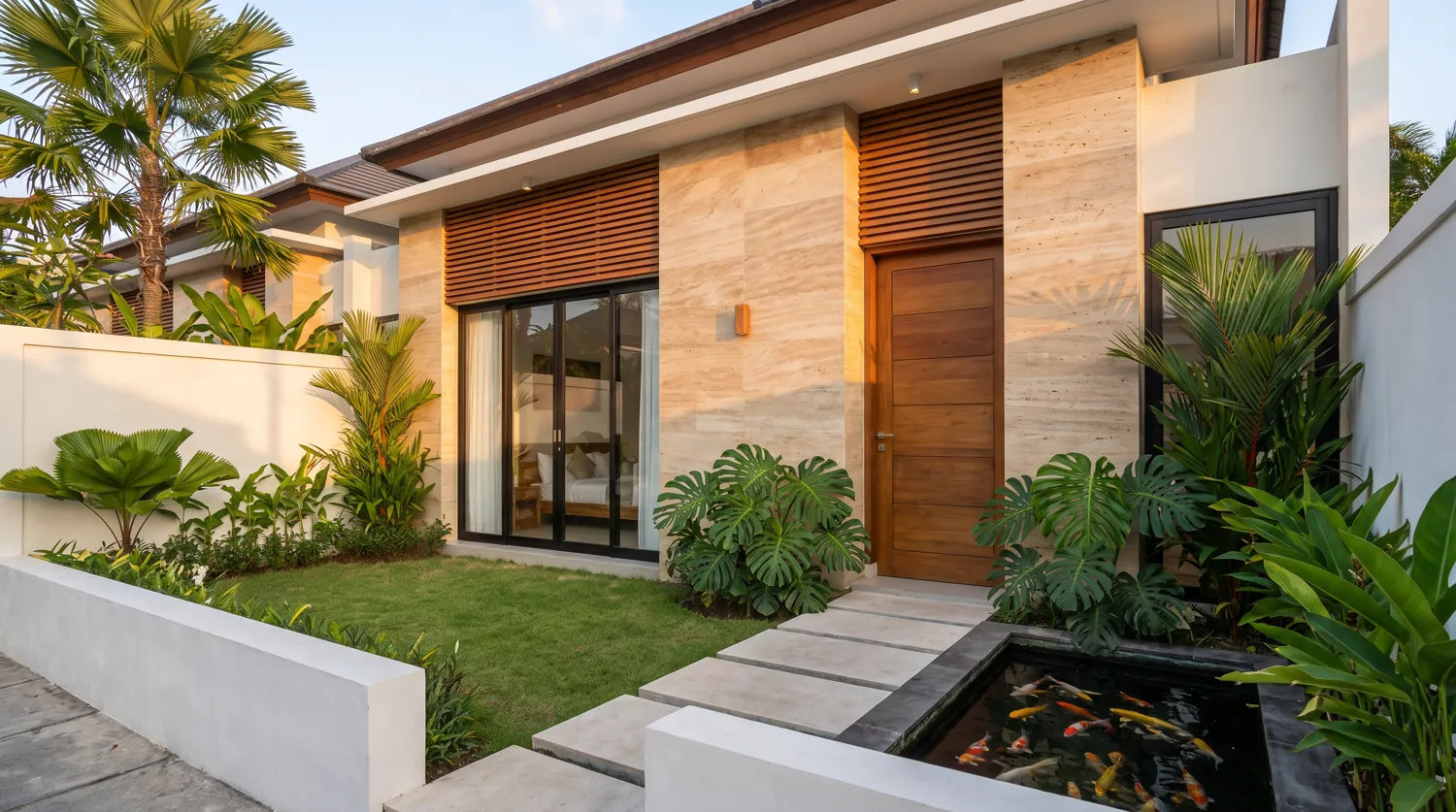
Flexible stone for villa facades
A practical guide for villa developers and architects in Bali.
Get free samples and a project quote
Send us your project — we'll match the right finish, calculate cost and support installation.