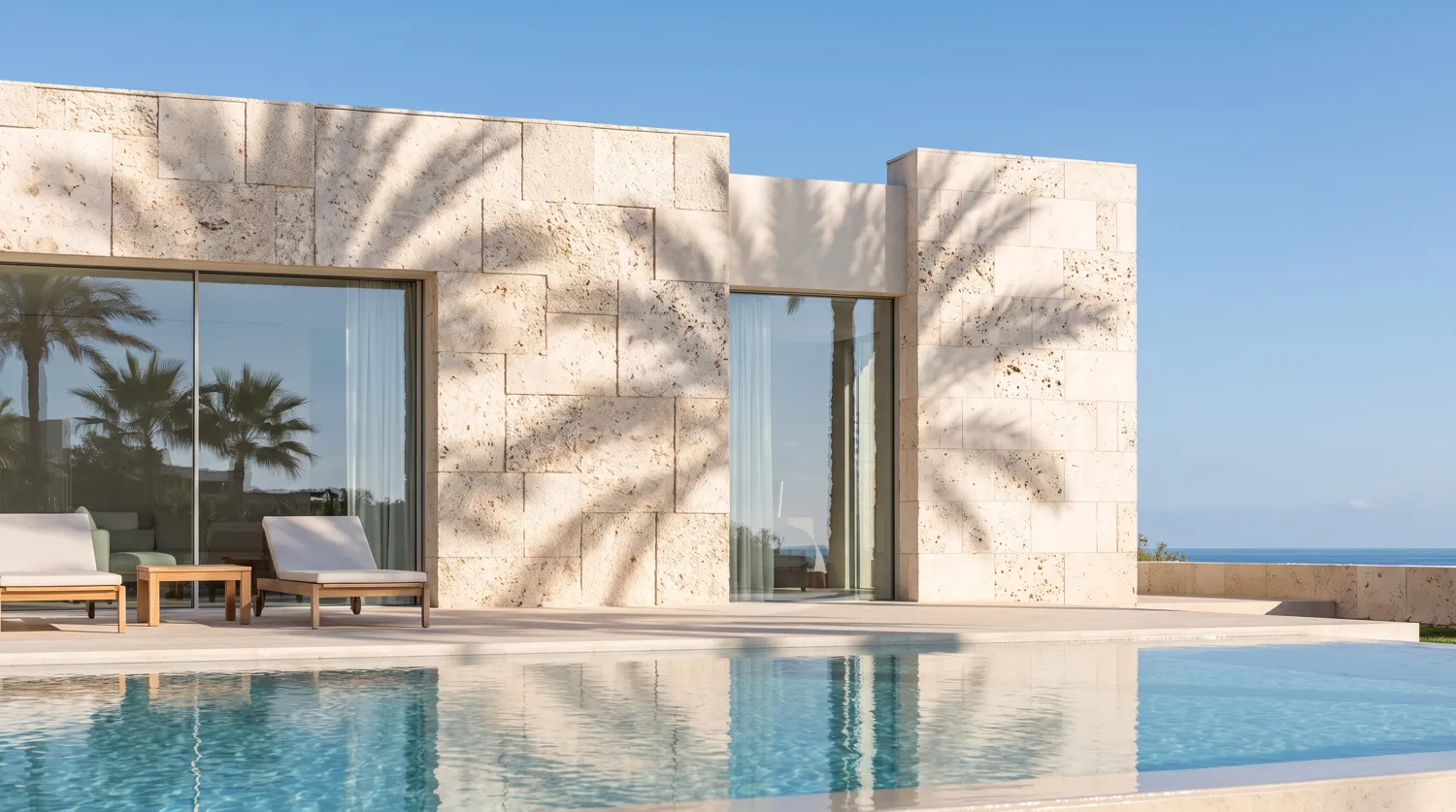
Best facade materials for the tropics
What survives humidity, salt air and UV in Bali and across Indonesia.
A tropical facade has to handle constant humidity, salt-laden air near the coast, intense UV and monsoon rain. Many popular materials fade, warp, corrode or grow mould. Here's what actually performs — and where flexible ceramic fits.
The tropical challenge
Coastal Bali combines salt spray, high humidity and strong sun; inland areas like Ubud add jungle moisture and moss. Timber warps and rots, painted render fades and cracks, and metal fixings corrode. Facade choices need to resist all of this with minimal upkeep.
Why flexible ceramic performs
Flexible ceramic is mineral-based, hydrophobic and UV-stable, so it resists mould, fading and water damage. It's non-combustible (A1) and, at 4–7 kg/m², adds no structural load — ideal for the fast, lightweight villa construction common across Bali.
It also reproduces the natural stone, clay and timber looks the region loves, without the maintenance those real materials demand in the tropics.
Practical tips for specifiers
Choose textured stone or clay finishes for coastal glare, use the material's bend capability for curved and clifftop forms, and pair it with proper substrate prep and adhesive for long-term adhesion in humid conditions.
Keep reading
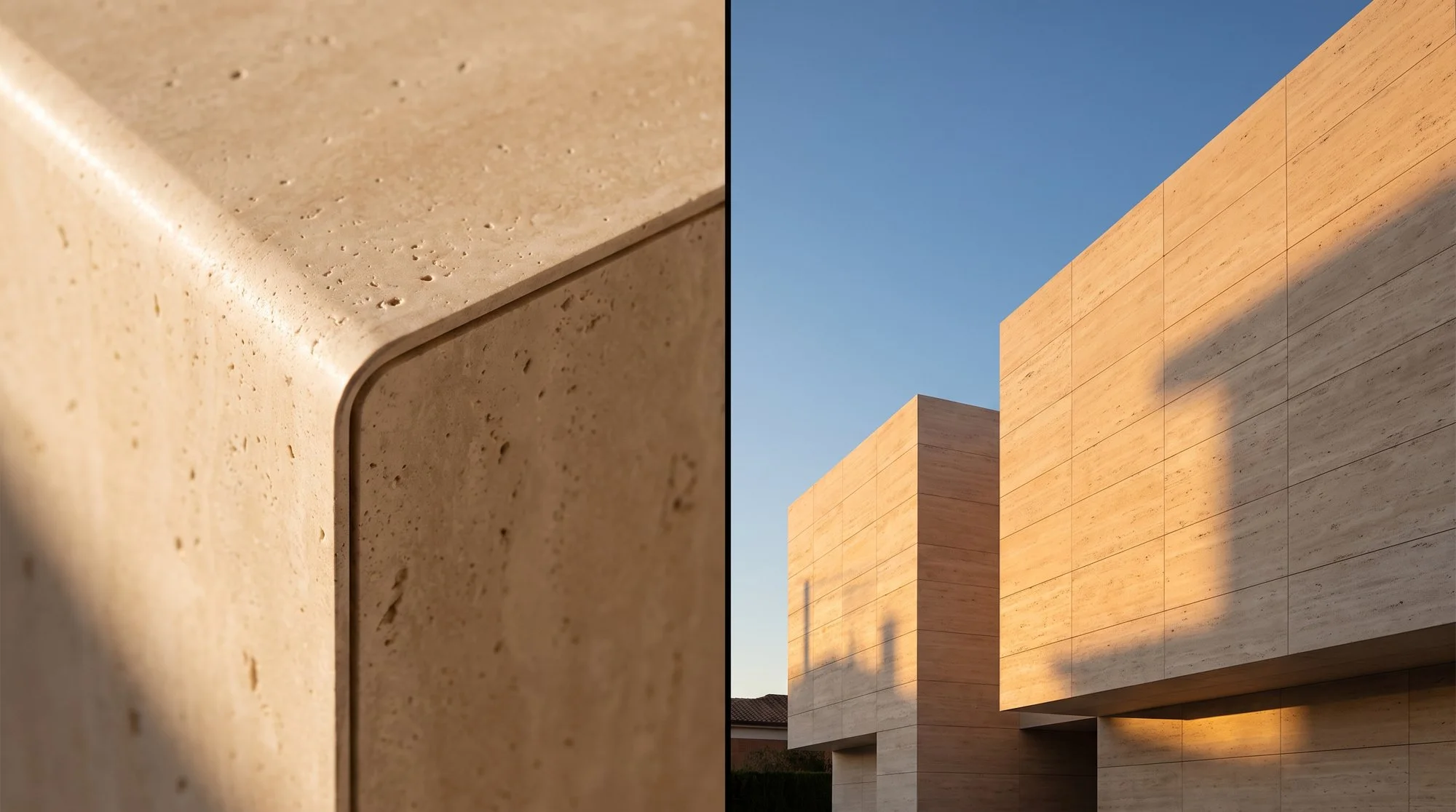
What is flexible ceramic?
The thin, bendable stone-look panel that's changing facades and interiors.
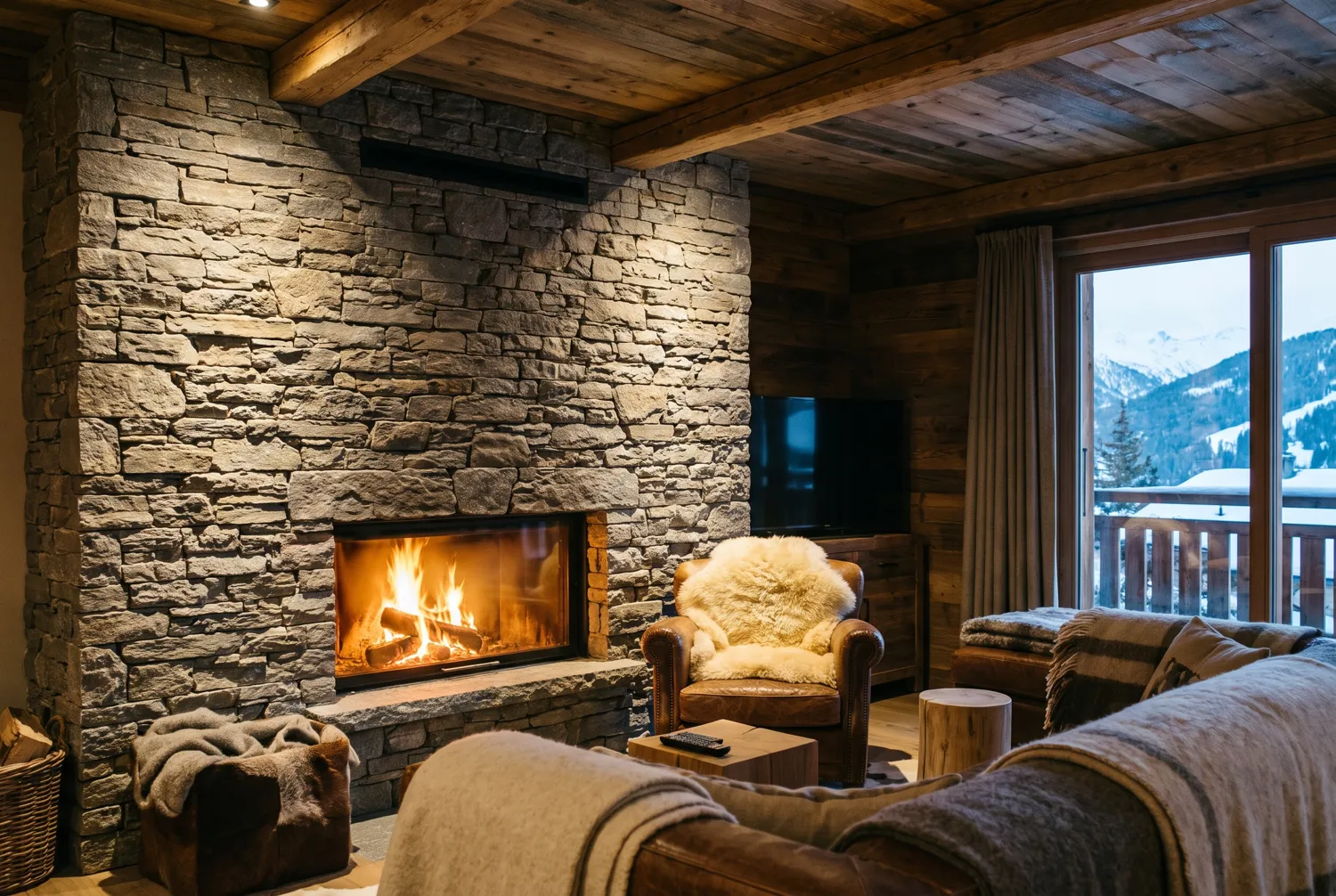
Flexible ceramic vs natural stone
How the thin, bendable panel compares to real stone and porcelain tile.
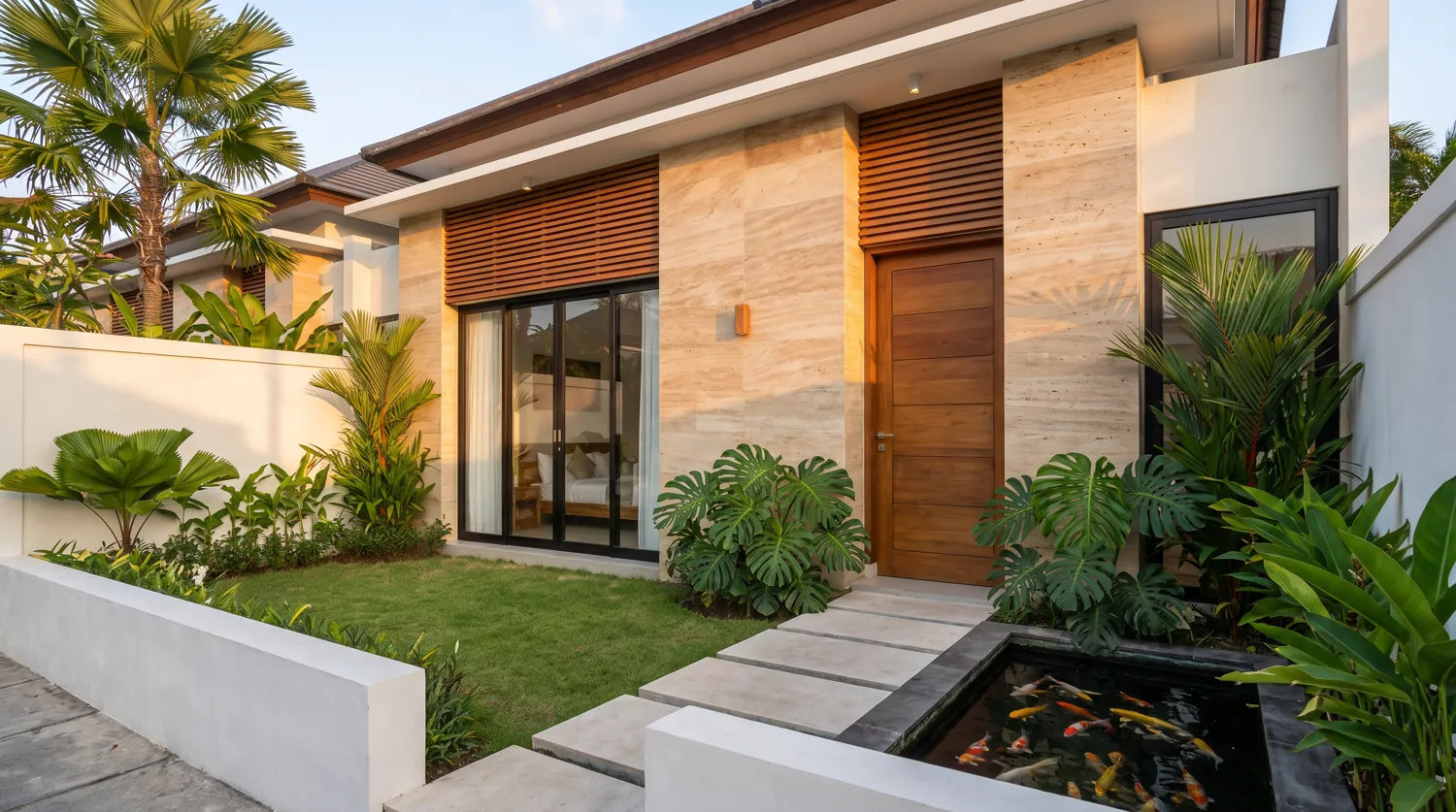
Flexible stone for villa facades
A practical guide for villa developers and architects in Bali.
Get free samples and a project quote
Send us your project — we'll match the right finish, calculate cost and support installation.