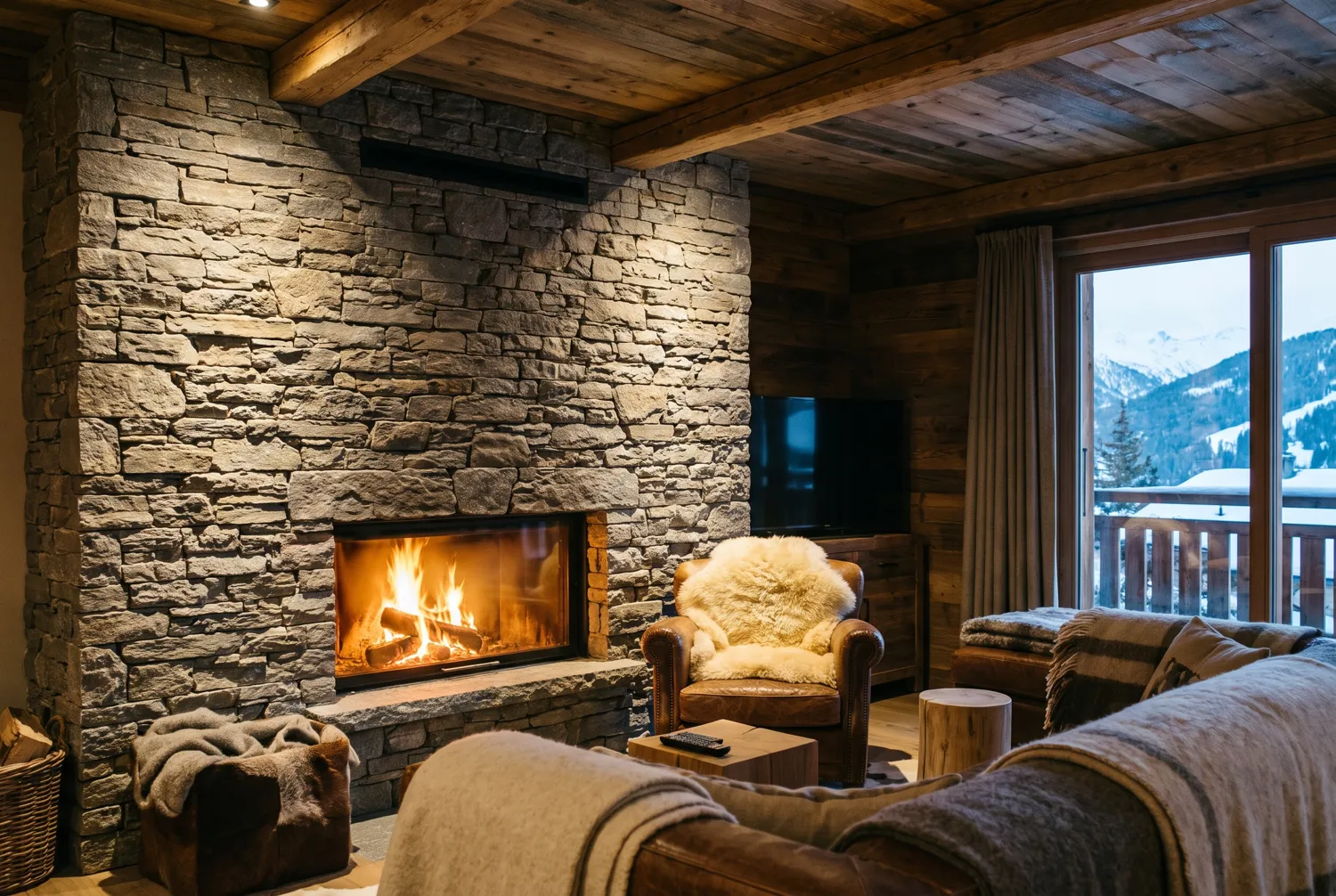
Flexible ceramic vs natural stone
How the thin, bendable panel compares to real stone and porcelain tile.
Natural stone is beautiful but heavy, thick and demanding to install. Flexible ceramic keeps the look while removing most of the weight, cost and complexity. Here's how they really compare.
Weight and structure
Natural stone cladding runs 80–120 kg/m² and often needs a metal sub-frame and structural checks. Flexible ceramic is 4–7 kg/m² and glues directly to the wall — no sub-frame, no added load, and far less risk on tall or lightweight structures.
Thickness and forming
At 20–30 mm, stone slabs are rigid and heavy to cut and lift. Flexible ceramic is 3–5 mm, cuts with a knife and bends around columns and arches, opening up curved designs that solid stone can't easily achieve.
Cost and installation time
Beyond the material, natural stone carries costs in transport, lifting equipment, sub-structure and skilled masonry. Flexible ceramic's light weight and glue-on method cut logistics and labour, and let projects finish faster — a major advantage on fast-turnaround commercial and rental builds.
Durability and maintenance
Both materials last, but flexible ceramic's coating is UV-stable and hydrophobic, resisting fading, staining and mould — useful in tropical climates. It also avoids the sealing and re-sealing cycle that porous natural stone often needs.
Keep reading
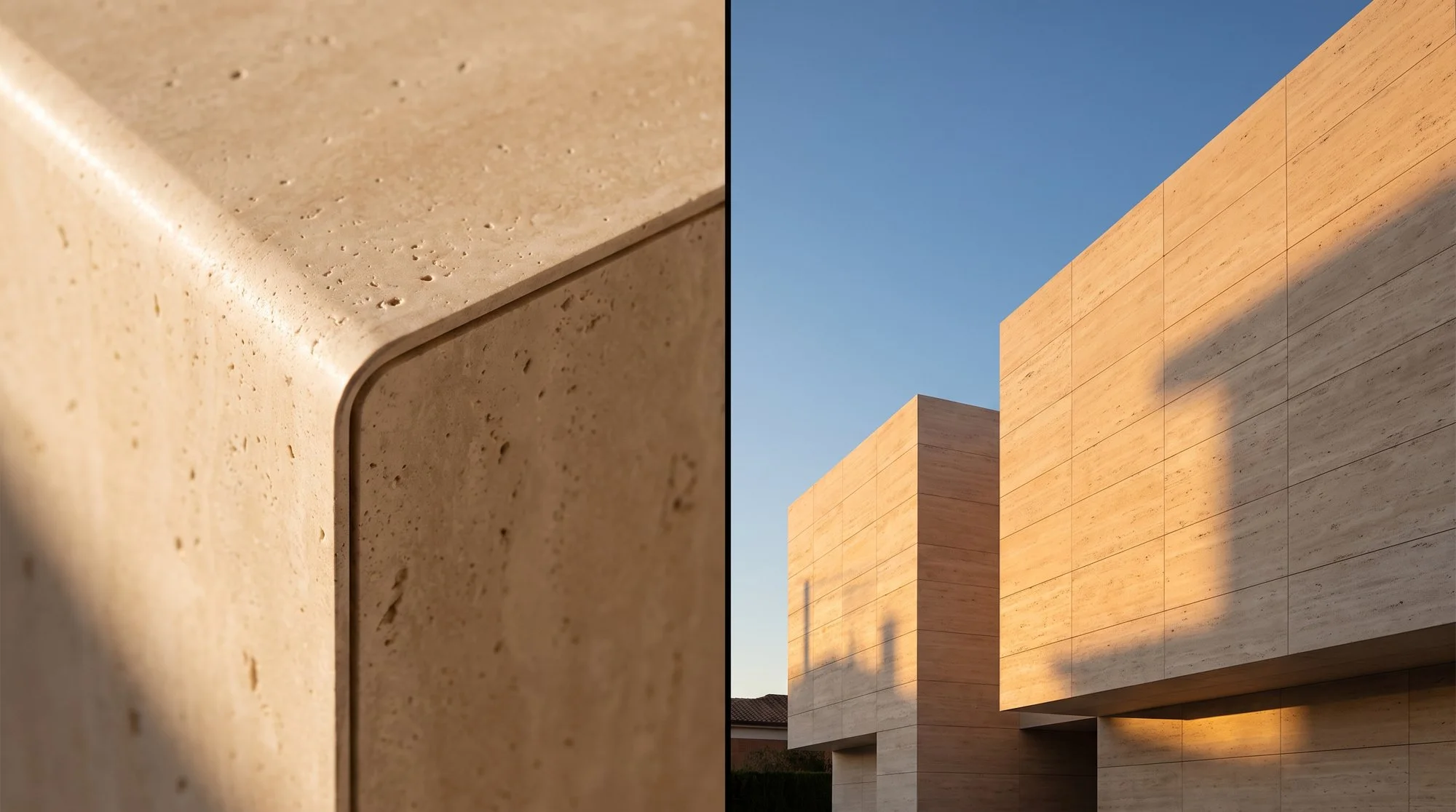
What is flexible ceramic?
The thin, bendable stone-look panel that's changing facades and interiors.
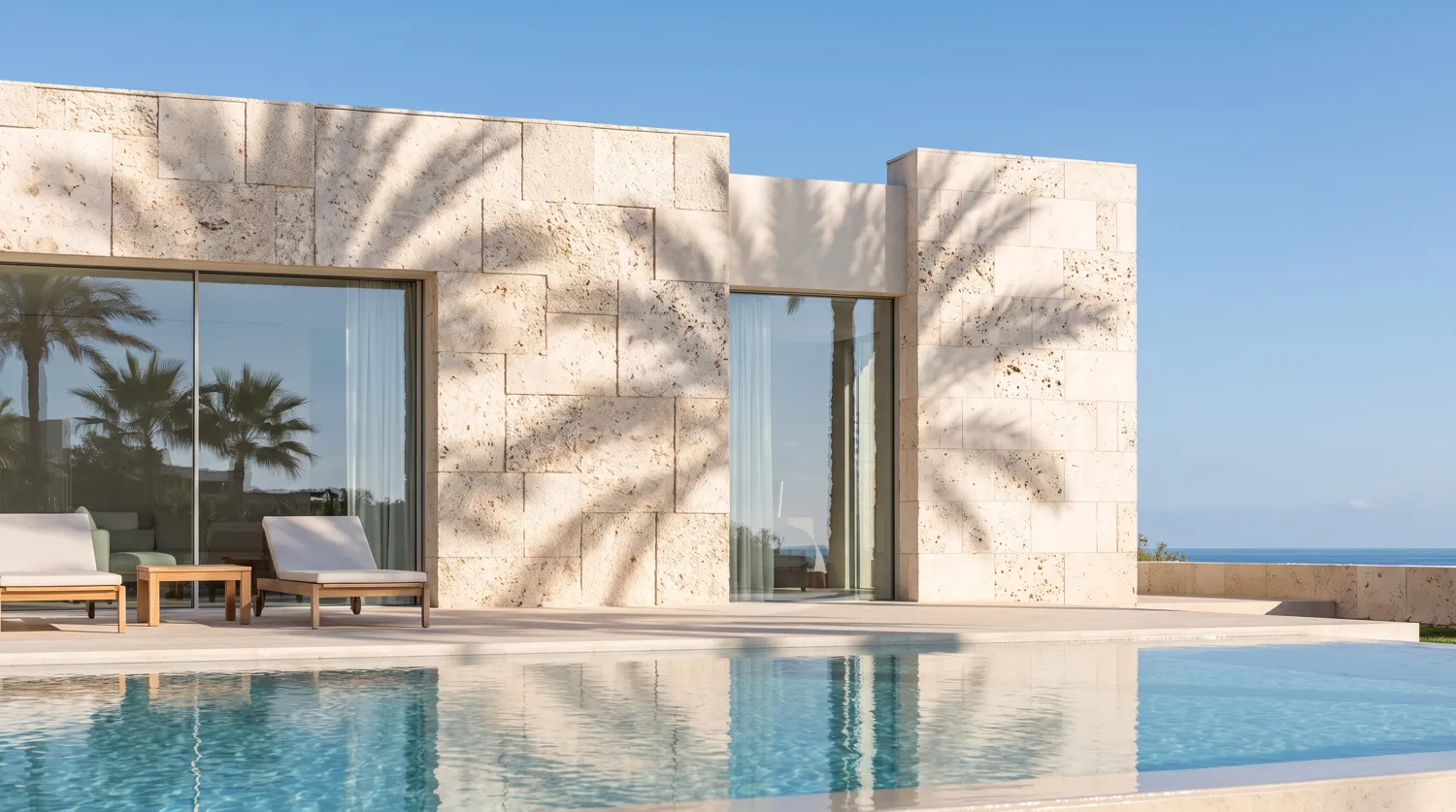
Best facade materials for the tropics
What survives humidity, salt air and UV in Bali and across Indonesia.
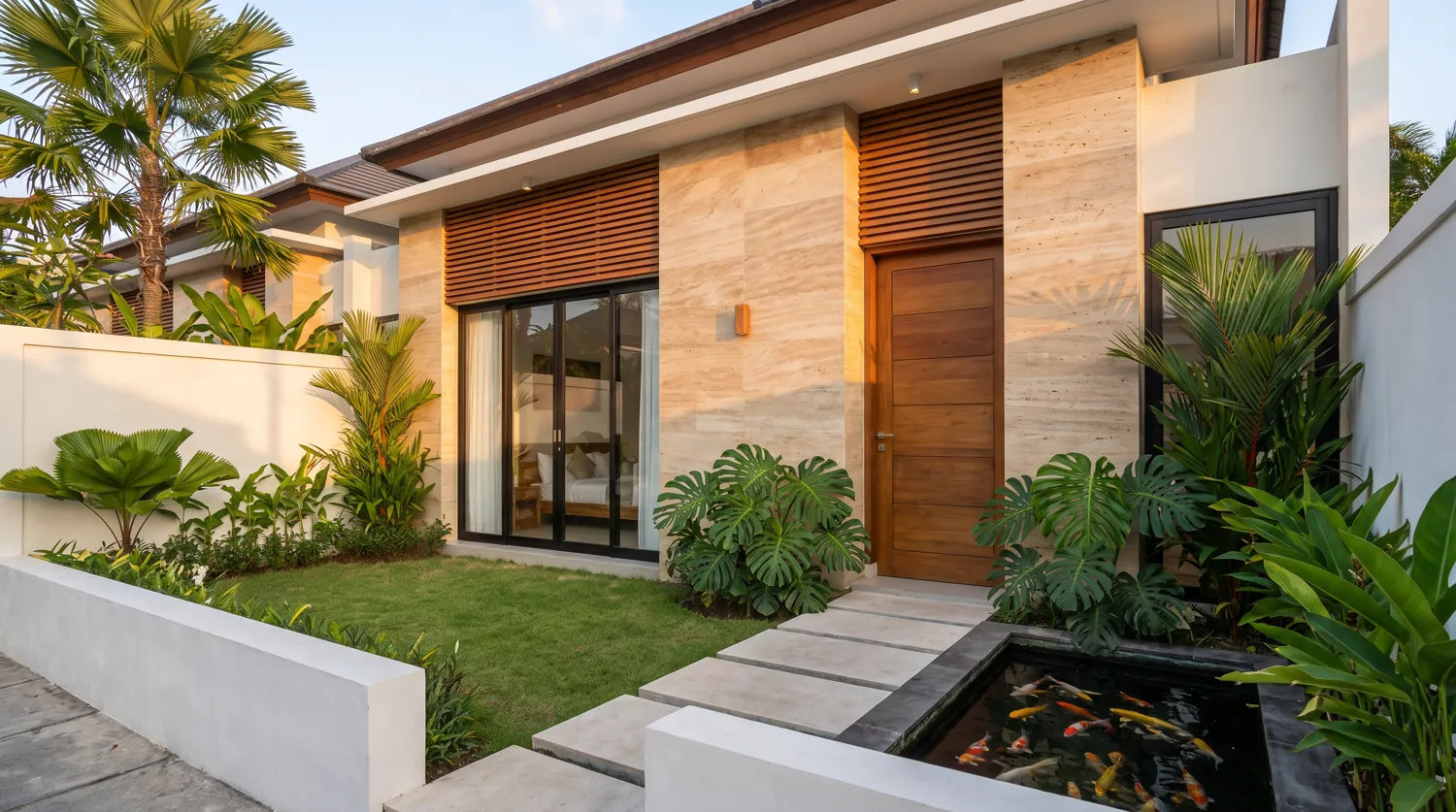
Flexible stone for villa facades
A practical guide for villa developers and architects in Bali.
Get free samples and a project quote
Send us your project — we'll match the right finish, calculate cost and support installation.