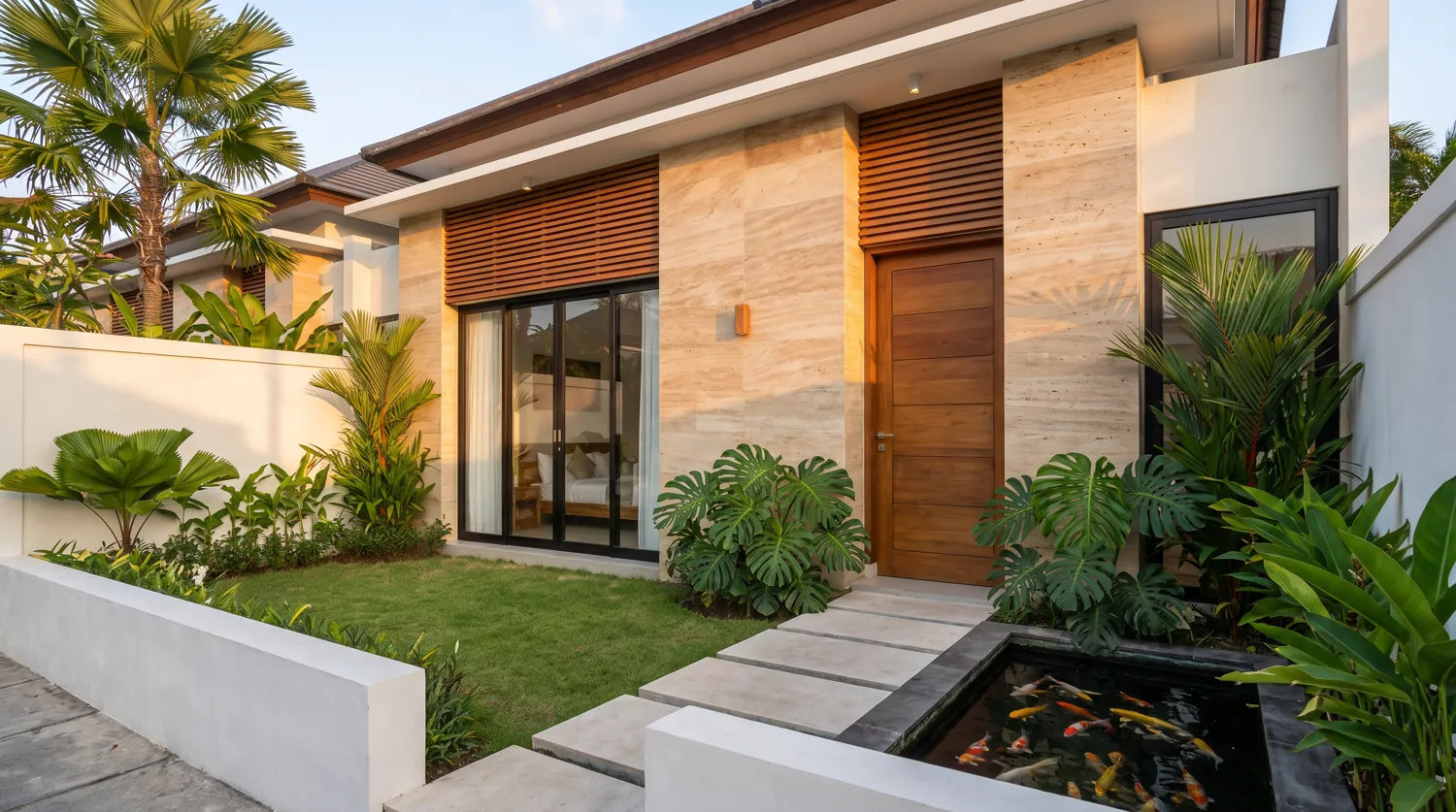
Flexible stone for villa facades
A practical guide for villa developers and architects in Bali.
Villa facades in Bali increasingly combine stone, timber and glass for a warm, modern-tropical look. Flexible stone veneer lets you deliver that palette faster and lighter. Here's how to specify it well.
Combine, don't clad flat
The strongest villa facades mix materials: a travertine or lava-stone volume against warm teak slats and full-height glazing. Flexible ceramic makes this easy — clad one volume in stone-look panels, leave another in timber, and let glass doors open to the garden.
Choose the right finish
Warm travertine and sandstone suit bright, coastal villas; black slate and lava stone give a dramatic, dusk-lit facade; clay and rammed-earth read as natural and grounded. All are available in the same lightweight, non-combustible panel.
Installation and curves
Because panels bend and glue on, curved corners, columns and parapets finish seamlessly. Prep the substrate, apply adhesive, and cut panels to size on site — no cranes, no heavy sub-frame.
What drives cost
Cost depends on finish, area and substrate condition more than on structure, since there's no sub-frame. Combining a feature stone facade with simpler rendered areas keeps budgets efficient while focusing impact where it counts.
Keep reading
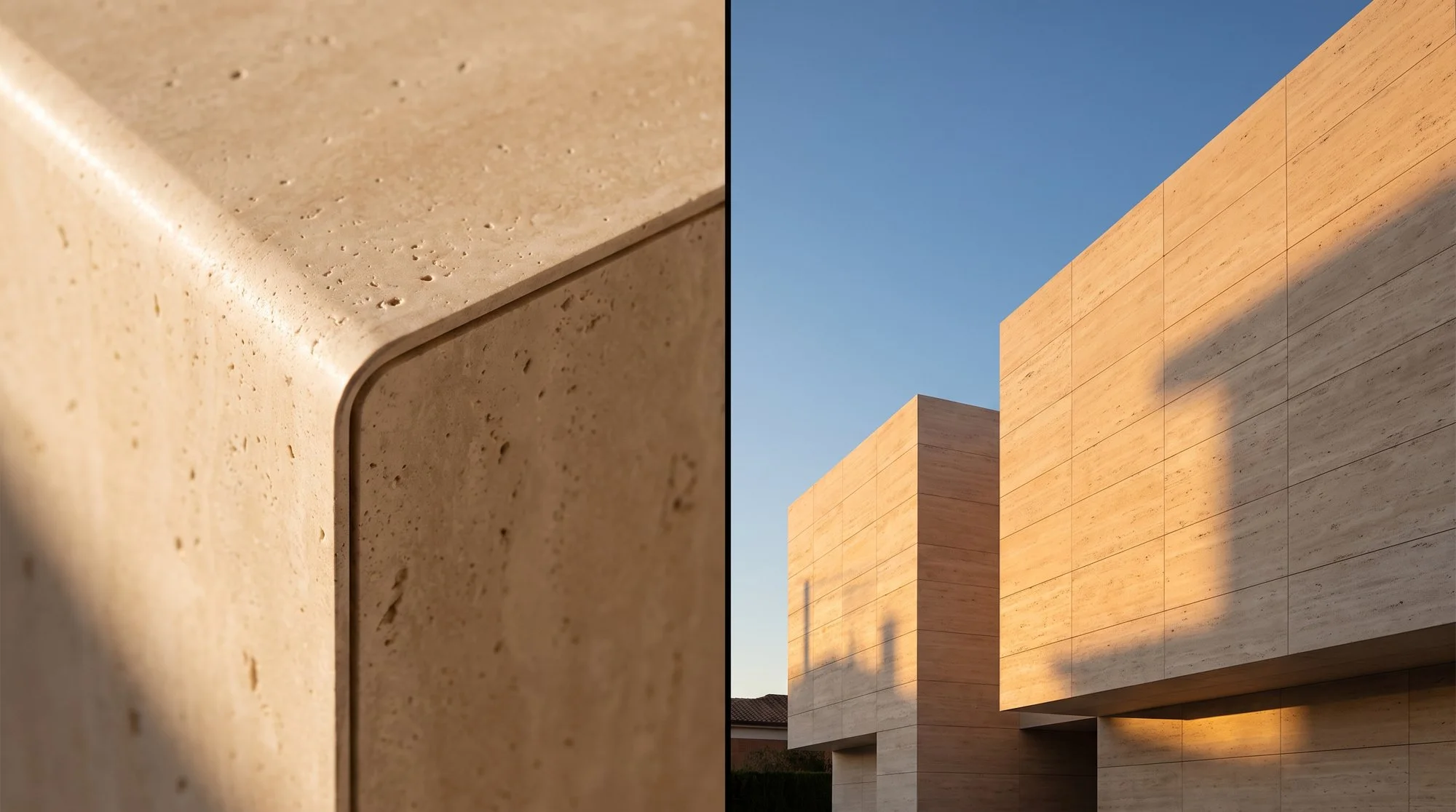
What is flexible ceramic?
The thin, bendable stone-look panel that's changing facades and interiors.
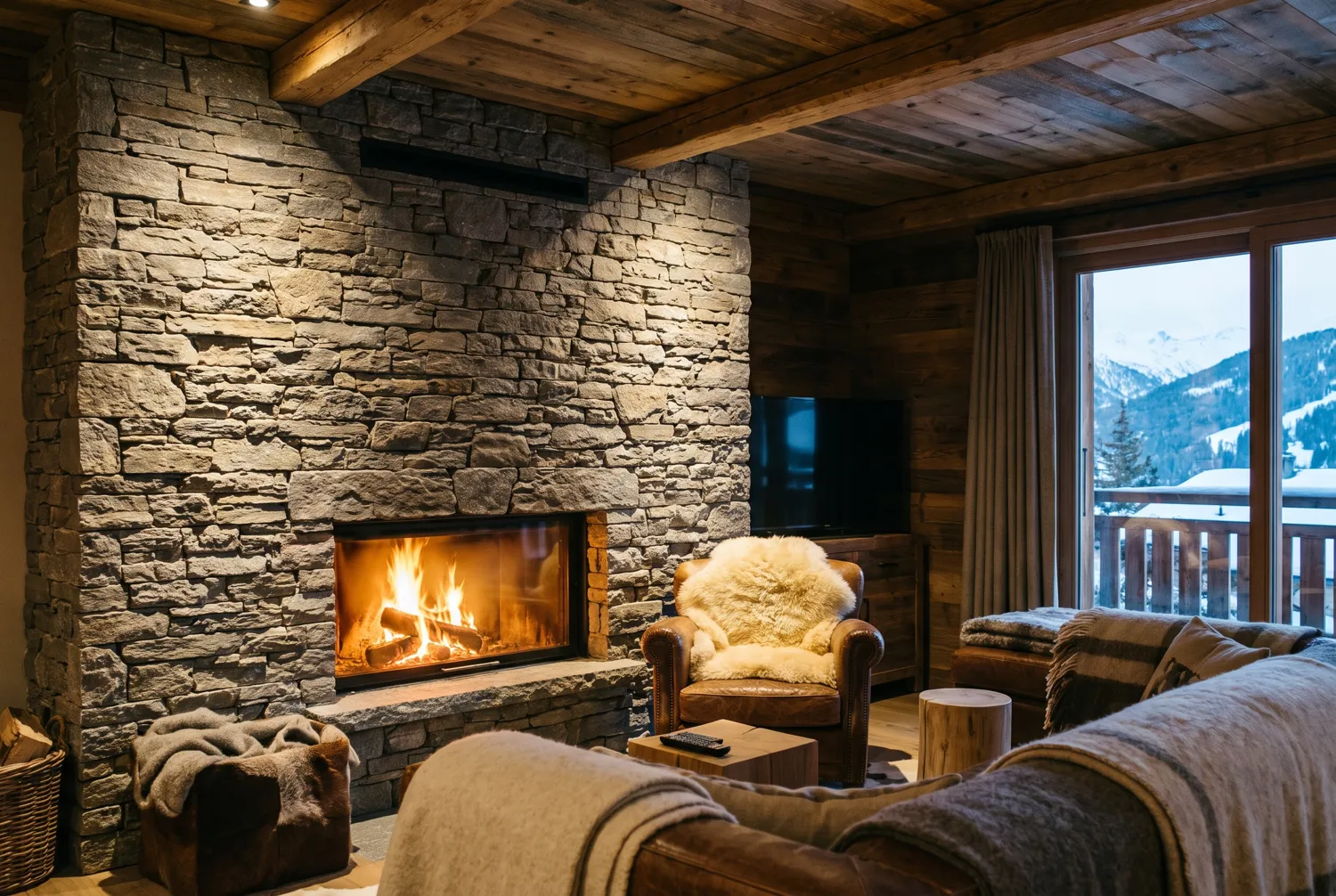
Flexible ceramic vs natural stone
How the thin, bendable panel compares to real stone and porcelain tile.
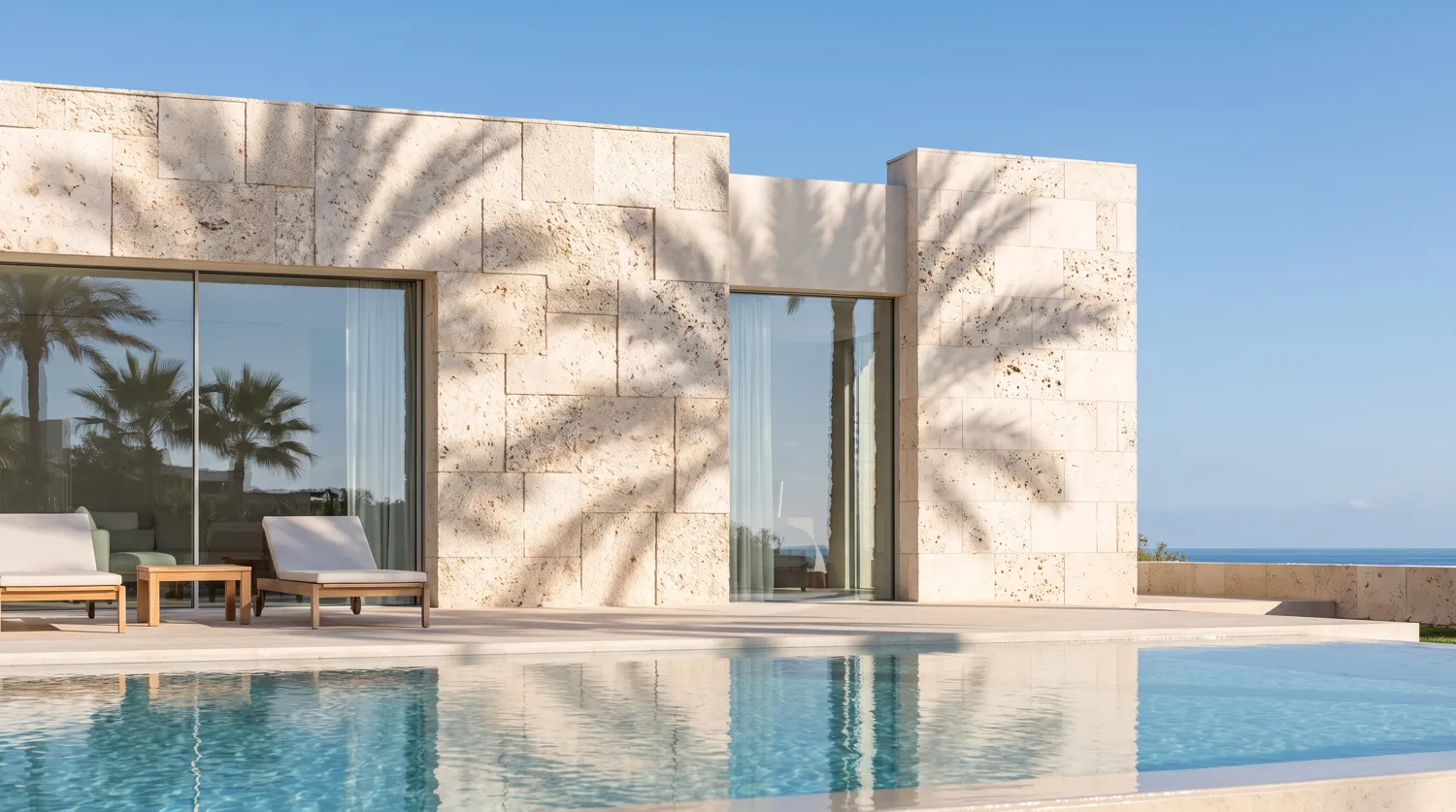
Best facade materials for the tropics
What survives humidity, salt air and UV in Bali and across Indonesia.
Get free samples and a project quote
Send us your project — we'll match the right finish, calculate cost and support installation.