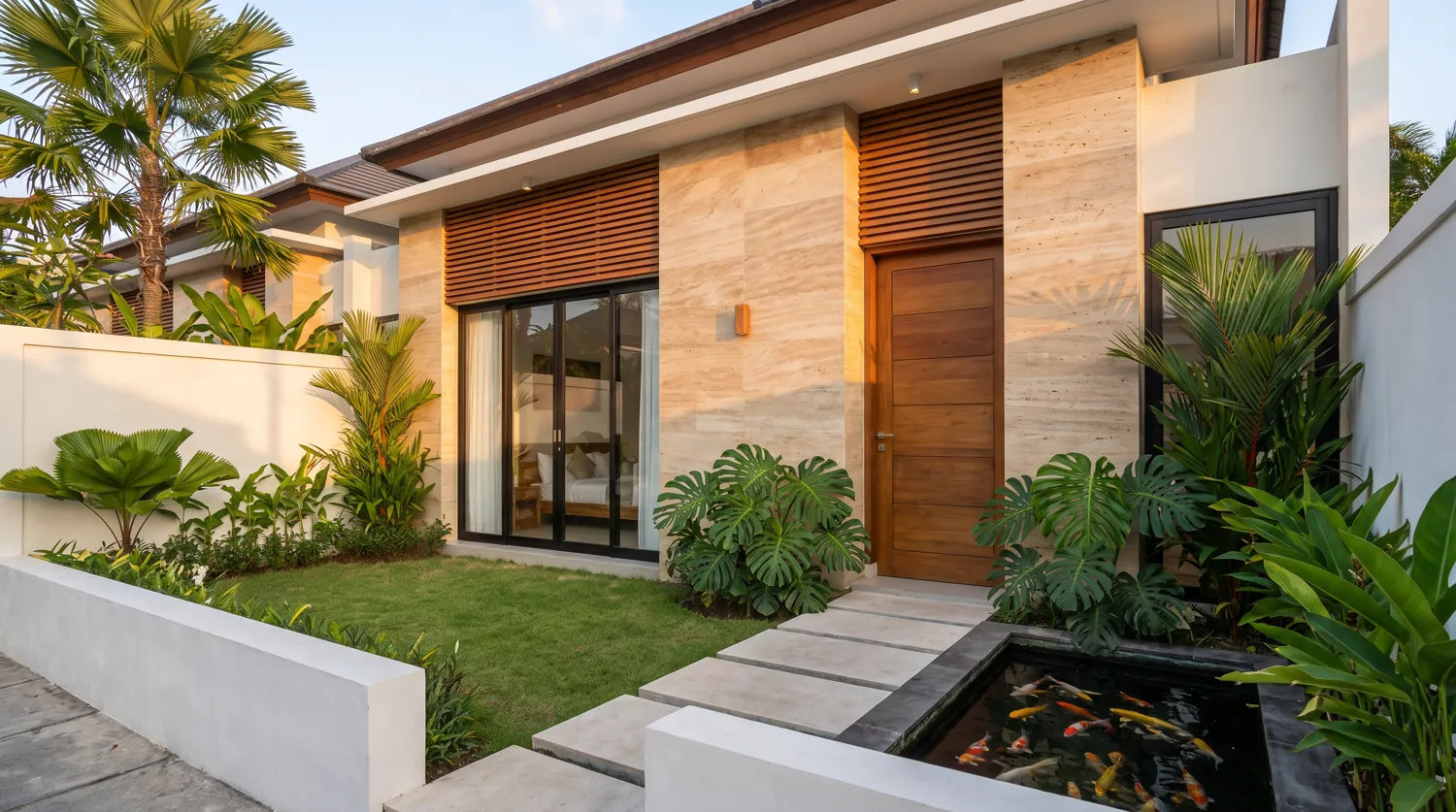
Eco-friendly finishing materials for building in Indonesia
What 'eco-friendly' should mean for wall and facade finishes: mineral composition, no resins or formaldehyde, light weight and long life, plus what to ask suppliers.
'Eco-friendly' is a claim. Here is how to test it
Almost every finishing product on the market is described as green. For a developer, architect or villa owner, that word is only useful if you can turn it into questions with checkable answers. A practical test looks at four things: what the material is made of, what it releases indoors, how much it weighs to produce and move, and how long it lasts before it must be replaced.
Nothing below is a certification claim. If a client or a green-building scheme requires formal documentation, ask the supplier for it for the exact product and finish you plan to buy.
Composition: mineral or plastic?
Many decorative wall products rely on plastics, resins or foams to get a thin, light or flexible panel. They can give off odours when new, soften in heat and are difficult to recycle or dispose of. Mineral products behave differently: stone, ceramic and mineral binders are stable, do not off-gas in the same way and do not feed on moisture.
When you compare options, ask these questions:
- What is the base material: stone powder, clay, cement, polymer, wood fibre?
- Is the binder mineral or resin?
- Does the product contain formaldehyde-based adhesives or fillers?
- Is the surface protection built into the panel or sprayed on top?
Indoor air: formaldehyde and emissions
Interior finishes in closed, air-conditioned rooms matter most for air quality, because emissions have nowhere to go. Boards made with certain resins, some adhesives and some paints are the usual sources. A mineral, formaldehyde-free surface removes one variable, particularly in bedrooms, children's rooms and treatment rooms where people stay for long periods.
Remember the adhesive, not only the panel. Choose adhesives with low emissions, ask the manufacturer what they recommend, and ventilate the room while it cures.
Weight, transport and the footprint of logistics
Indonesia is an archipelago. Moving heavy stone or tile from a quarry or a port to a hillside villa takes trucks, ferries and cranes, and that effort has a cost both in money and in emissions. A lighter material needs less of all of it.
Flexible ceramic weighs 4-7 kg/m² and comes as a 3-5 mm sheet, roughly 15-20 times lighter than natural stone at the same coverage. That means fewer trucks per project, less structural reinforcement and, with normal care, fewer broken pieces on the way than rigid slabs. The benefit is easy to understand without needing precise carbon figures, and we do not publish any here: ask for the actual shipping weight of your order and compare it with the alternatives.
Durability is the greenest property
A finish that must be redone every few years is a heavy burden regardless of what it is made of. Repainting a facade means new paint, scaffolding, labour and waste, again and again. A surface that keeps its colour and does not crack, absorb water or grow mould delays that cycle.
The declared service life for the flexible stone collections is 15-20 years on a facade. The colour is held by a UV-stable coating, and the surface does not need sealing or repainting; routine care is washing with water or a mild detergent. That is one reason architects specify it for tropical facades, as discussed in the guide to facade materials for the tropics.
Less waste on site
Material that arrives in the right quantity and is cut cleanly produces less rubbish. Panels cut with a knife or shears rather than a saw leave larger, cleaner offcuts and almost no dust, and offcuts can be reused on columns, returns and small details. Ordering by measured area plus a realistic allowance for cuts, rather than rounding up generously, keeps surplus low. Ask us for guidance on the allowance for your layout, because a plain wall and a facade full of corners are not the same.
Also think about the end of the building's life. A thin, glued-on layer goes on without a heavy sub-frame, which means fewer mixed materials and less steel in the wall. That is a practical advantage for a future refurbishment.
A short comparison
| Question | Resin or plastic-based decorative panel | Mineral thin cladding (flexible ceramic) |
|---|---|---|
| Main material | Polymers, resins, foams | Natural stone powder and a modified mineral binder |
| Fire behaviour | Often combustible or melts | Class A1, non-combustible (core flexible stone collections) |
| Formaldehyde | Depends on product | Formaldehyde-free |
| Weight | Light | Light, 4-7 kg/m² |
| Service life outdoors | Varies; UV can degrade | 15-20 years, UV-stable coating |
Other collections such as PU stone use different materials, so check each product separately instead of assuming the same properties across a catalogue.
What to put in a specification
- State the composition requirement: mineral binder, no formaldehyde, no resin-based core.
- State the fire class required and ask for the documentation for that series.
- Specify low-emission adhesives and an installation method that avoids unnecessary waste.
- Ask for sample sheets, then check cutting offcuts: a knife-cut material generates less dust than saw-cut slabs.
- Ask about the logistics route to your site and the shipping weight per square metre.
For the technical background see what is flexible ceramic and the FAQ.
FAQ
Is flexible ceramic formaldehyde-free?
Yes. It is made from natural stone powder and a modified mineral binder, with no resins or formaldehyde, which makes it suitable for living spaces.
Does STRATA publish carbon or eco certificates?
We do not make unsupported green claims. Ask us for the documentation available for the exact series you intend to use, and we will tell you plainly what exists.
Why does light weight count as eco-friendly?
Less weight means fewer trucks, less lifting and lighter structure for the same coverage, and less breakage in transport on an island-to-island supply chain.
Need a mineral, formaldehyde-free finish for your project? Message us on WhatsApp to request samples and a wholesale price list, and ask for the documents you need for your client.
Keep reading
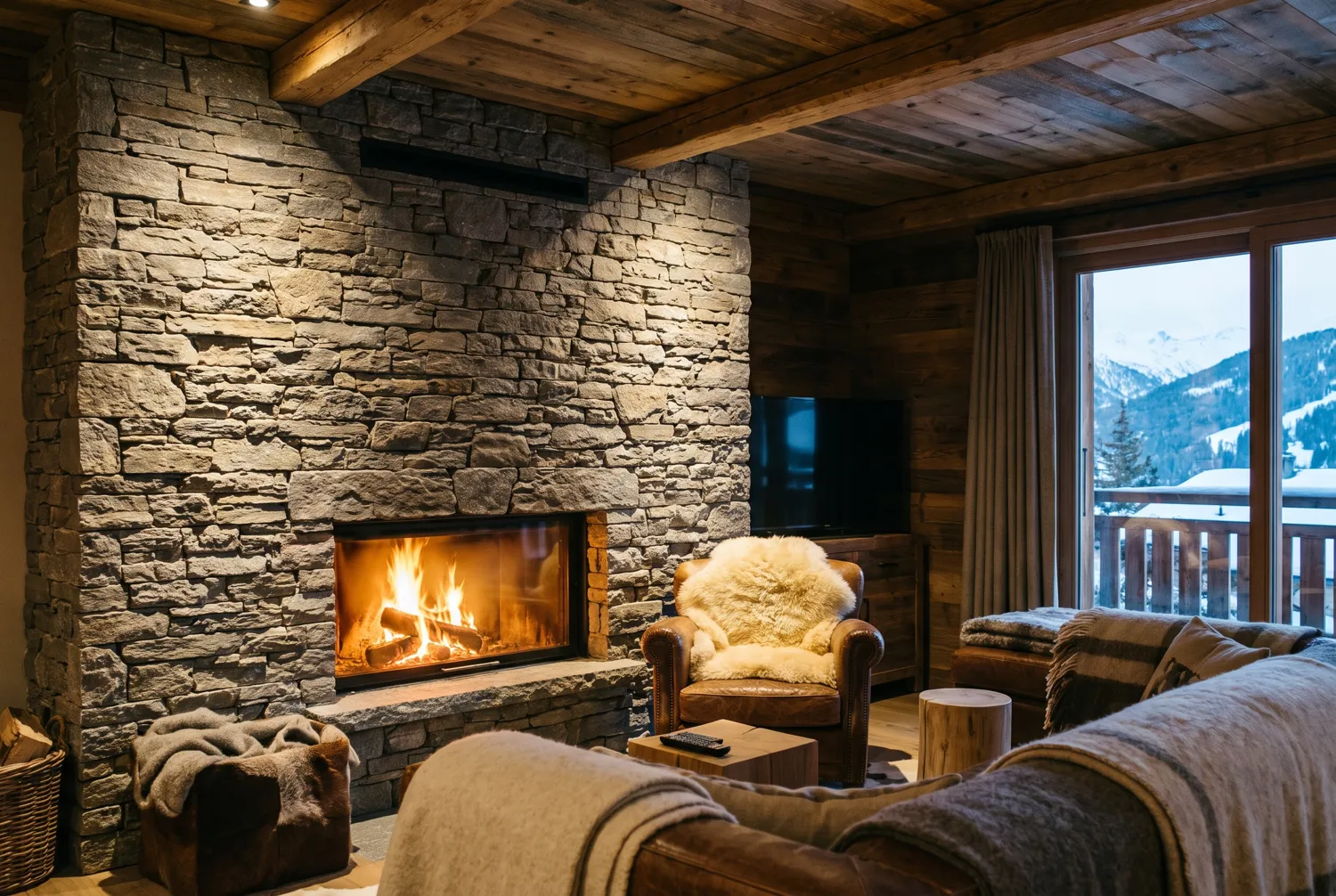
Flexible ceramic vs natural stone
How the thin, bendable panel compares to real stone and porcelain tile.
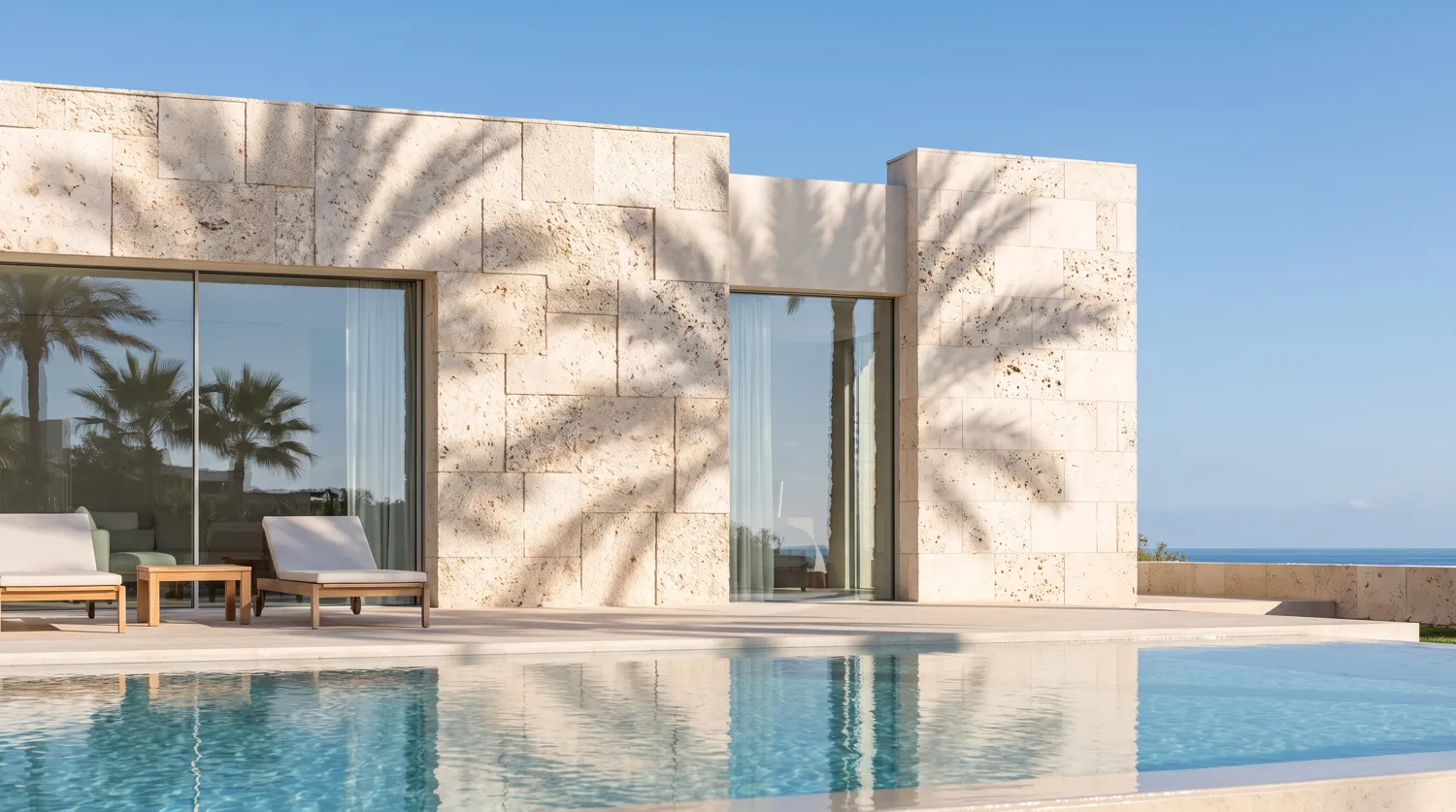
Best facade materials for the tropics
What survives humidity, salt air and UV in Bali and across Indonesia.
Flexible stone for villa facades
A practical guide for villa developers and architects in Bali.
Get free samples and a project quote
Send us your project — we'll match the right finish, calculate cost and support installation.