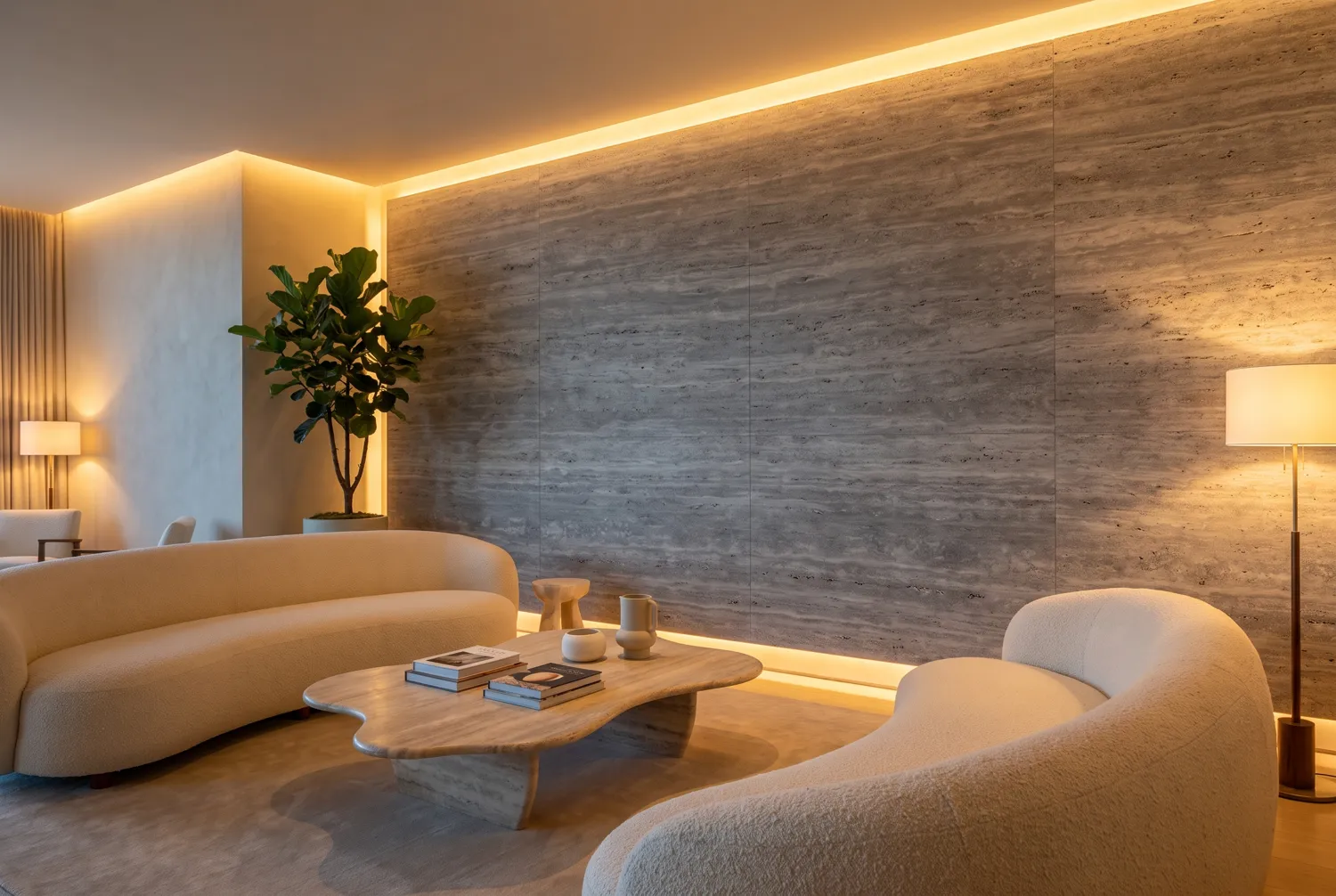
Flexible ceramic: cost guide
What drives price — and why installed cost often beats natural stone.
The sticker price of a panel is only part of the story. Because flexible ceramic needs no sub-frame and installs fast, its total installed cost is often lower than natural stone even when the material looks identical.
Material and finish
Price varies by finish and series — standard travertine and concrete looks sit lower, while premium marble, metal and translucent panels cost more. Panel size and thickness also play a part.
Installation and substrate
Labour depends on area, complexity (curves, columns) and substrate condition. Since there's no metal sub-frame, structural and fixing costs are minimal compared with stone or ventilated systems.
Total installed cost vs stone
Add transport, lifting, sub-structure and skilled masonry to natural stone, and flexible ceramic frequently wins on total cost — while removing weight and program risk. For rental villas and commercial refits, the faster completion has real financial value.
Getting an accurate quote
Costs are best estimated per project. Share your area, chosen finish and substrate, and we'll provide a detailed quote including installation guidance.
Keep reading
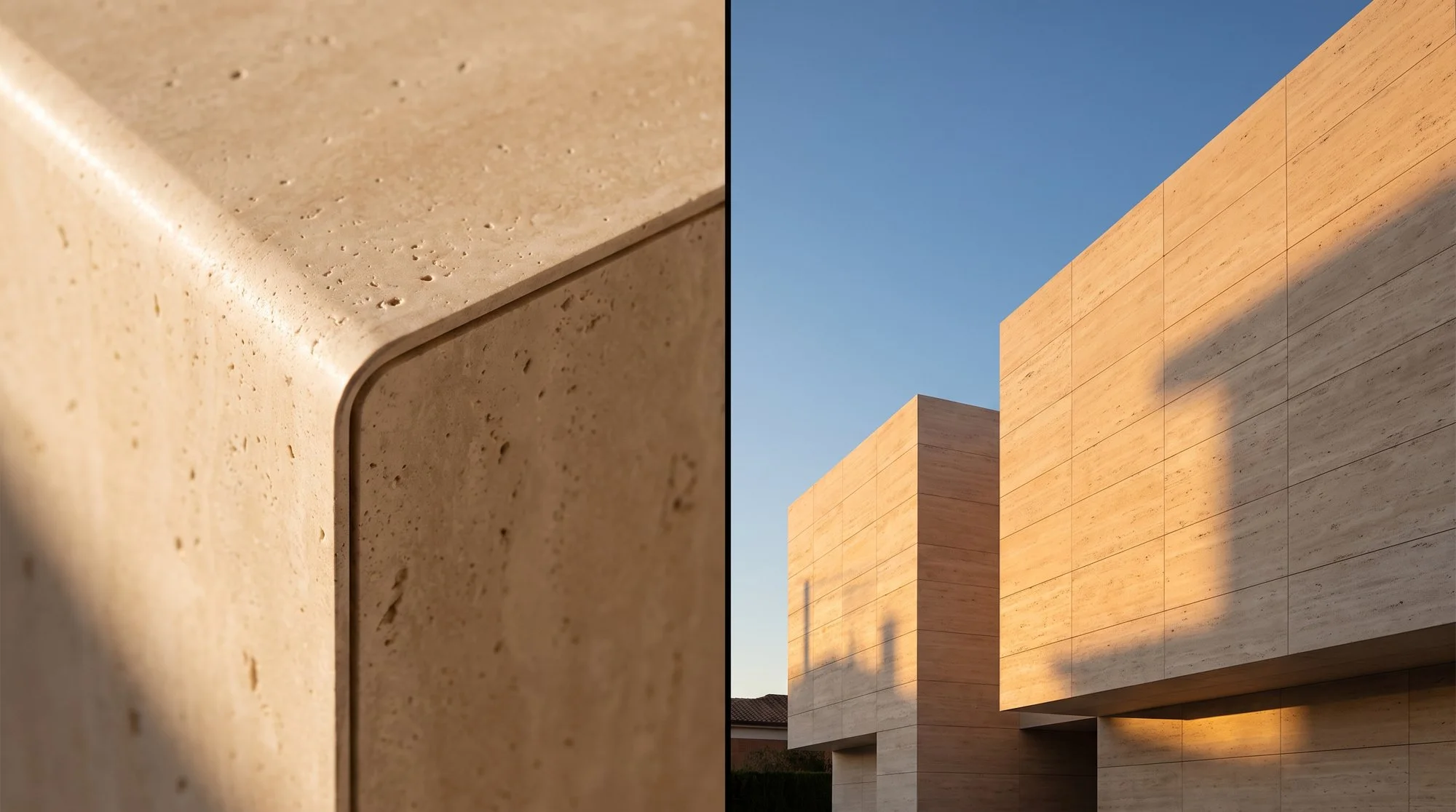
What is flexible ceramic?
The thin, bendable stone-look panel that's changing facades and interiors.
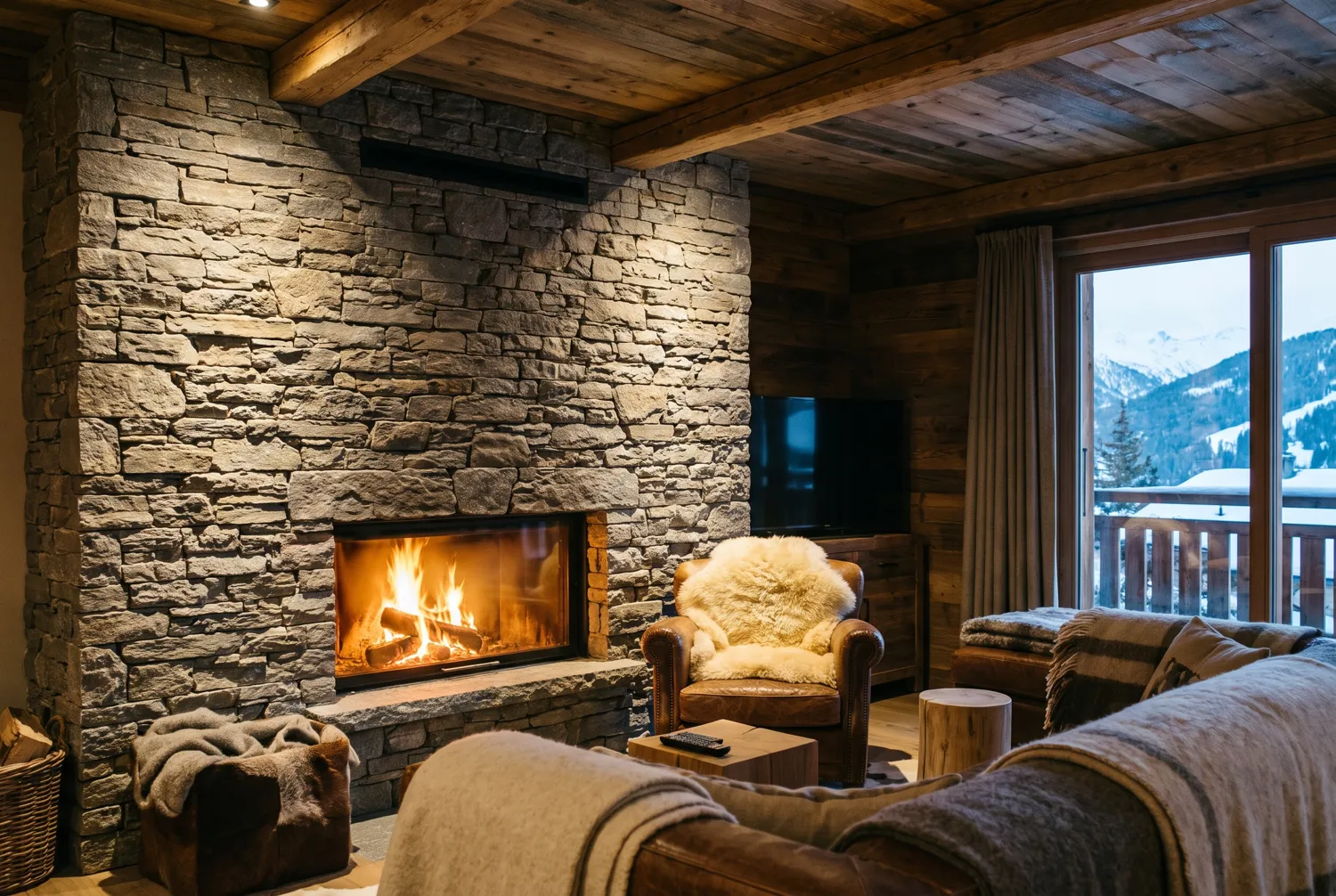
Flexible ceramic vs natural stone
How the thin, bendable panel compares to real stone and porcelain tile.
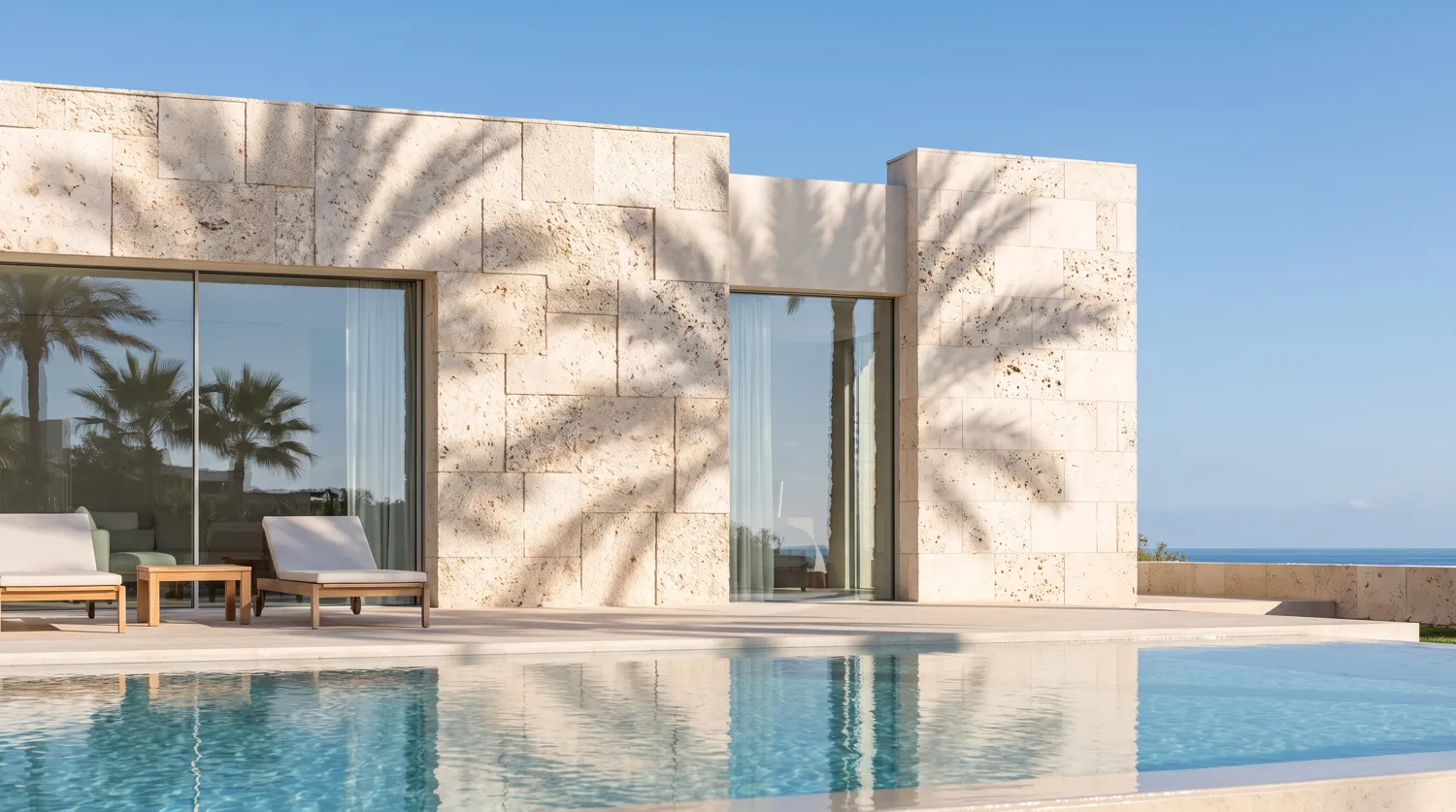
Best facade materials for the tropics
What survives humidity, salt air and UV in Bali and across Indonesia.
Get free samples and a project quote
Send us your project — we'll match the right finish, calculate cost and support installation.