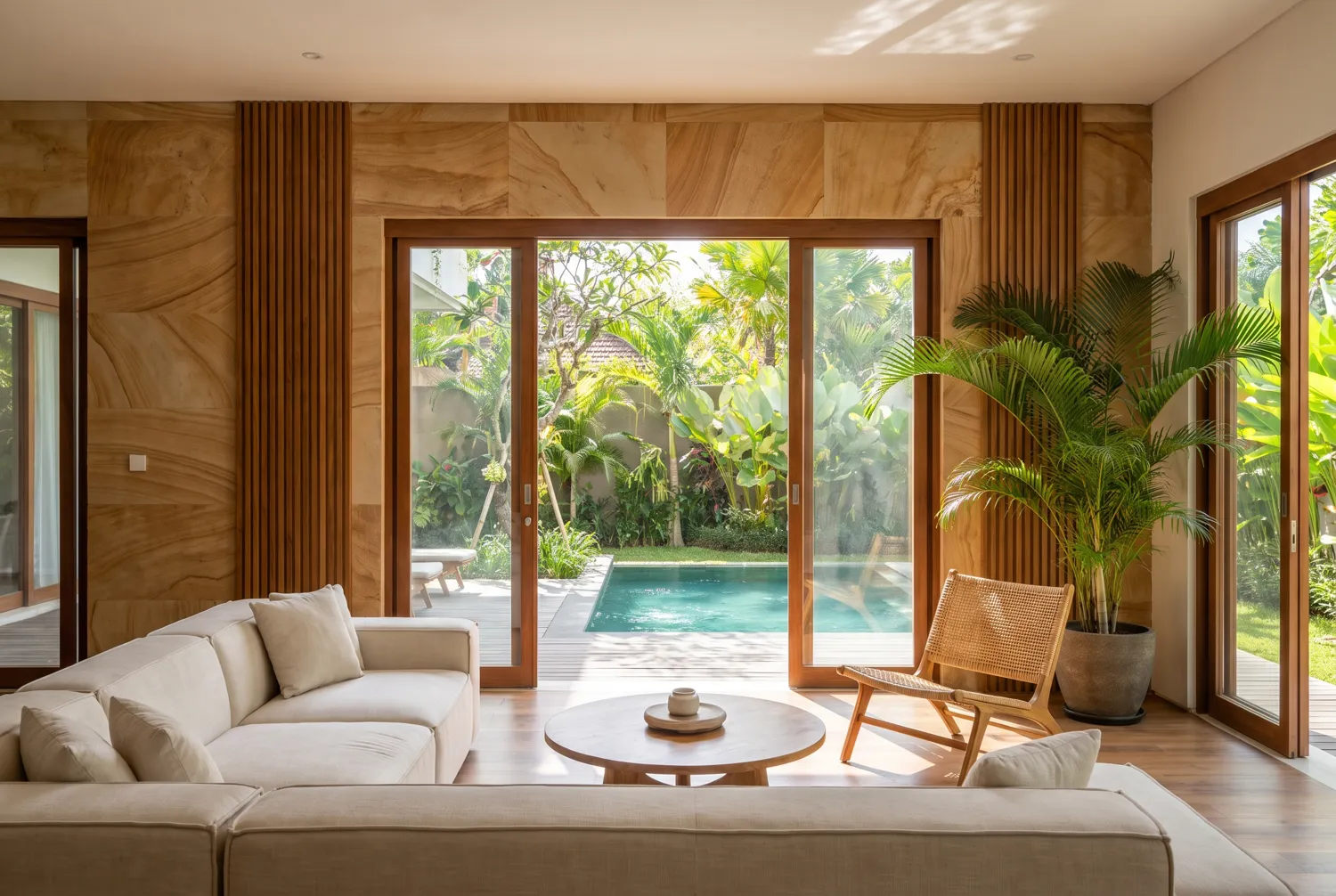
Mould-resistant wall materials for tropical buildings
Why walls grow mould in Indonesia, which finishes feed it, and which mineral wall materials stay clean in humid rooms, shaded exteriors and air-conditioned spaces.
Why walls grow mould in the tropics
In Indonesia, mould is not a sign of a neglected building. It is the default outcome when humidity stays high, air stands still and the wall surface can hold moisture. Bathrooms, kitchens, shaded outer walls, rooms behind wardrobes and walls cooled by air conditioning are the usual starting points.
The cause is rarely one thing. Rain driven into porous render, a slow leak behind a basin, condensation on a cold AC wall and a lack of cross-ventilation can all do the same job: keep a surface damp long enough for spores to settle and grow. Paint then hides the first stains for a season, and the mould returns through the new film.
Mould needs three things. Take away two
Mould needs moisture, a food source and time at a comfortable temperature. In the tropics you cannot control temperature, and moisture is hard to eliminate completely, so material choice is about the second item: food.
- Organic materials such as timber, paper-faced boards, fabric and some wallpapers and paint films give mould something to feed on.
- Mineral materials such as stone, ceramic and mineral binders offer far less to feed on, so growth on the surface is mostly limited to dust and dirt that settles on it.
- Porous mineral materials still hold water, so they can stay damp and stain even if they are not a food source themselves.
The best wall surface is therefore mineral and does not absorb water. Both properties matter together.
How common wall finishes compare
This is a general guide to mould behaviour in humid conditions, not a test result. Individual products vary.
| Wall finish | Mould risk in humid conditions | Why |
|---|---|---|
| Painted cement render | Medium to high | Porous body, paint film can hold dirt and moisture; recurring stains |
| Paper-faced plasterboard | High if it gets wet | Organic paper facing absorbs moisture and feeds growth |
| Wood panels and wallpaper | High | Organic material that swells and stays damp |
| Ceramic or porcelain tile | Low on the tile, higher in the grout lines | Dense surface, but joints are porous and collect dirt |
| Flexible ceramic (MCM) | Low | Mineral composition with a hydrophobic factory treatment; few joints |
Where mould actually starts in a building
Before choosing a finish, find the real source. In practice, mould problems cluster in a short list of places:
- Bathrooms and spas. Steam and splashing keep surfaces wet every day.
- Exterior walls that never see the sun. Shade, rain and tropical vegetation keep these walls damp for months.
- Walls behind furniture. No airflow, so moisture stays on the surface.
- Air-conditioned rooms. Cold wall surfaces meet warm humid air and condensation forms.
- Anywhere with a hidden leak. Pipes, flat roofs and window junctions.
Fix leaks and condensation sources first. A better surface helps a lot, but it will not cure a wall that is being wetted from inside.
Flexible ceramic in humid rooms and shaded exteriors
Flexible ceramic, also called MCM, flexi stone or soft stone, is made from natural stone powder and a modified mineral binder in a 3-5 mm sheet. It is formaldehyde-free, has a factory hydrophobic treatment and is described as mould-resistant, which is why it is used in bathrooms, spas and pool surrounds as well as on facades. Panels do not fade, mould or absorb water, and routine cleaning is just water or a mild detergent.
Practically, the material suits two problem areas well. In wet rooms, a large-format sheet that wraps around corners means fewer joints than tile. On shaded exterior walls, the surface does not hold moisture the way painted render does. Read the FAQ for substrates and wet-area use, or see how the material performs in tropical facade conditions.
A practical approach for bathrooms and wet rooms
Wet rooms are where the mineral, low-absorption approach pays off most. A few choices make a visible difference:
- Clad the full height of splash zones, such as behind the basin and around the shower, rather than stopping at a short line.
- Use large sheets and wrap inside corners where the material allows, so there are fewer joints to collect dirt.
- Seal the junction between the wall surface and fixtures, baths and floors with a sealant suited to wet areas.
- Slope shower floors and ledges so water runs away, not toward the wall.
- Ventilate every time: a surface that dries between uses stays clean far longer.
Moisture control still matters
No wall surface fixes poor building physics. Combine the right material with a few basics:
- Ventilate bathrooms and kitchens with a working extractor or a proper opening.
- Avoid blocking airflow behind large furniture on exterior walls.
- Insulate or manage cold surfaces in air-conditioned rooms, and run the system with controlled humidity.
- Repair leaks and failed joints promptly, before anything is cladded over them.
- Prepare the substrate properly: clean, sound and dry before gluing anything on.
What to ask a supplier
When you compare mould-resistant products, ask for specifics rather than slogans:
- Is the body mineral, and does it contain organic fillers or resins?
- What is the water absorption of the exact finish you are buying?
- Is the protection built into the material or only a topcoat?
- How is the surface cleaned, and does cleaning damage it?
- What substrates and wet-area conditions does the manufacturer allow?
We can send samples so you can test cleaning and moisture behaviour on a real piece before committing to a batch.
FAQ
Is flexible ceramic safe to use in bathrooms?
Yes. The factory hydrophobic treatment makes it suitable for bathrooms, spas and pool surrounds, where it resists moisture and mould. Prepare the substrate and detail corners and joints correctly.
How do I clean mould-resistant wall panels?
Wash with water or a mild detergent. The material does not need special care and does not absorb water the way porous plaster does.
Will a mould-resistant material stop mould if the wall is leaking?
Not entirely. A surface that resists mould helps, but a continuing leak or condensation problem should be repaired at the source.
Dealing with damp walls in a villa, hotel or apartment project? Message us on WhatsApp to request samples and a wholesale price list for mould-resistant wall cladding.
Keep reading
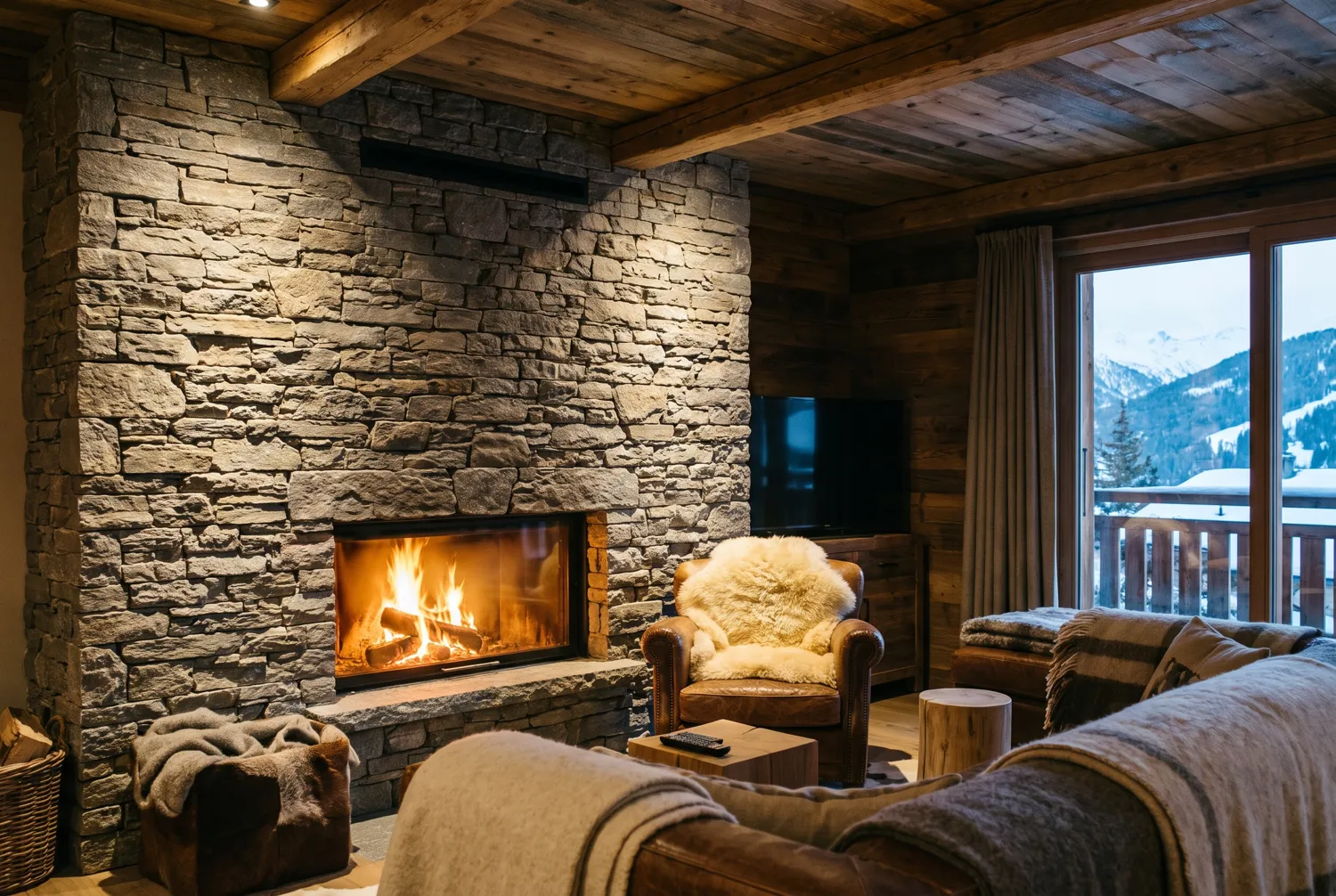
Flexible ceramic vs natural stone
How the thin, bendable panel compares to real stone and porcelain tile.
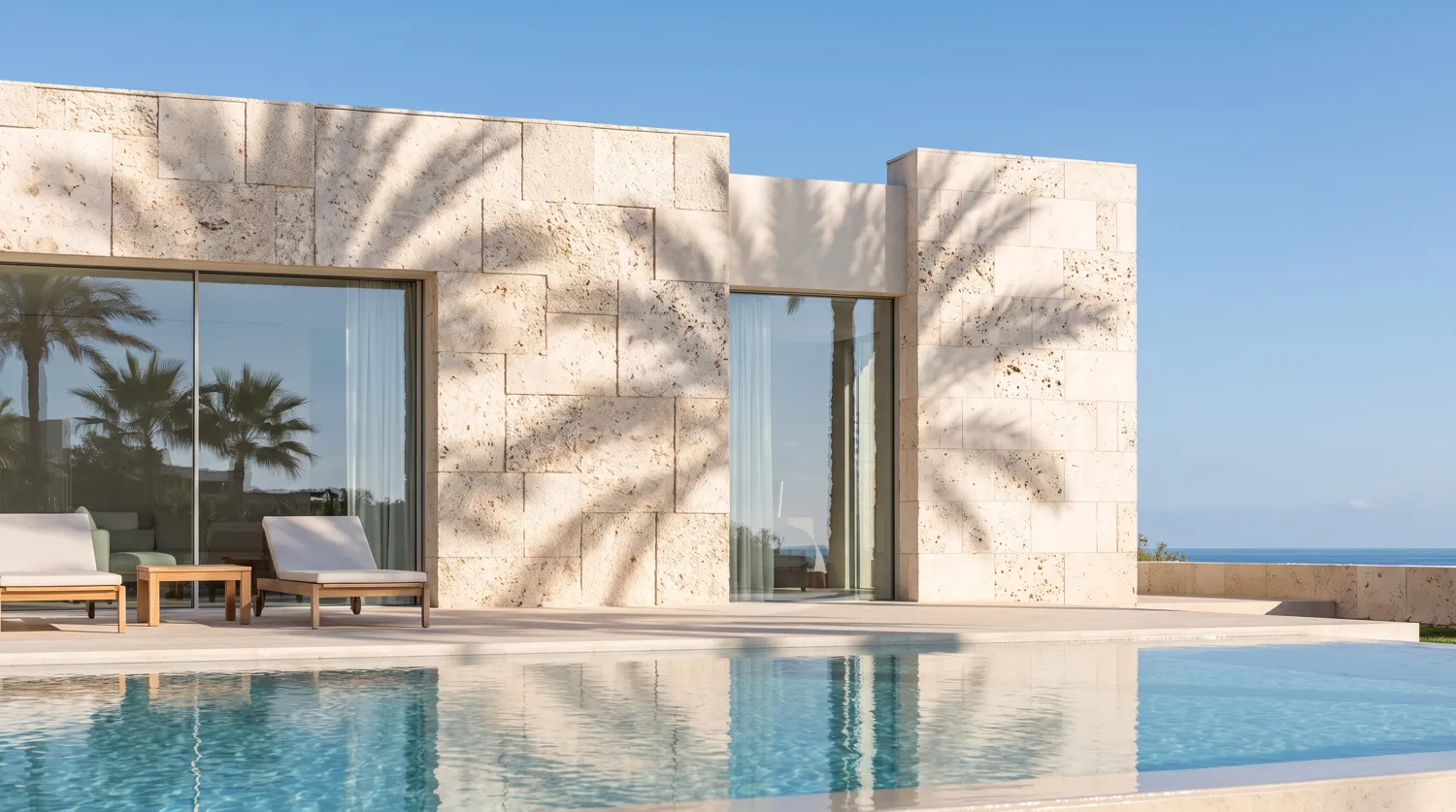
Best facade materials for the tropics
What survives humidity, salt air and UV in Bali and across Indonesia.
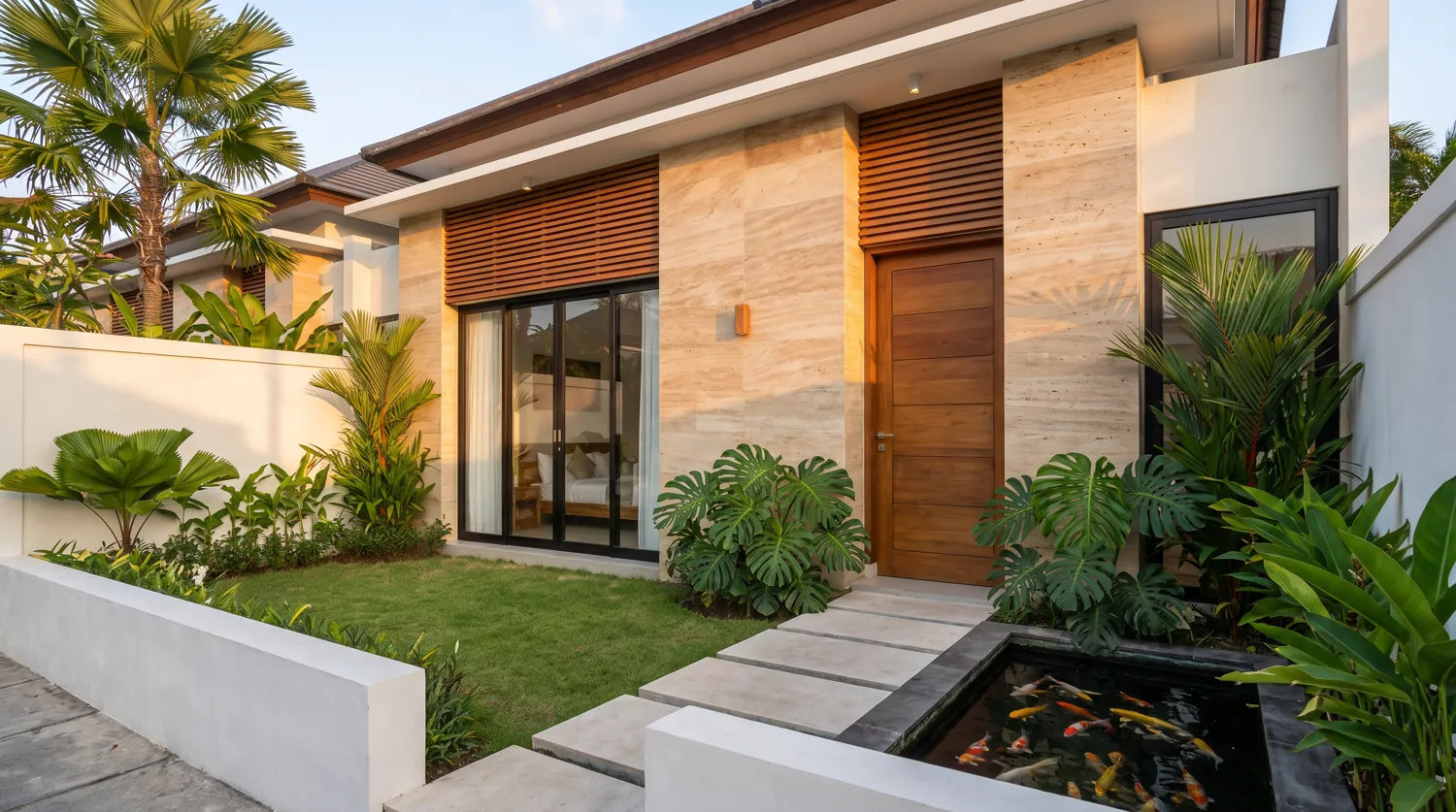
Flexible stone for villa facades
A practical guide for villa developers and architects in Bali.
Get free samples and a project quote
Send us your project — we'll match the right finish, calculate cost and support installation.