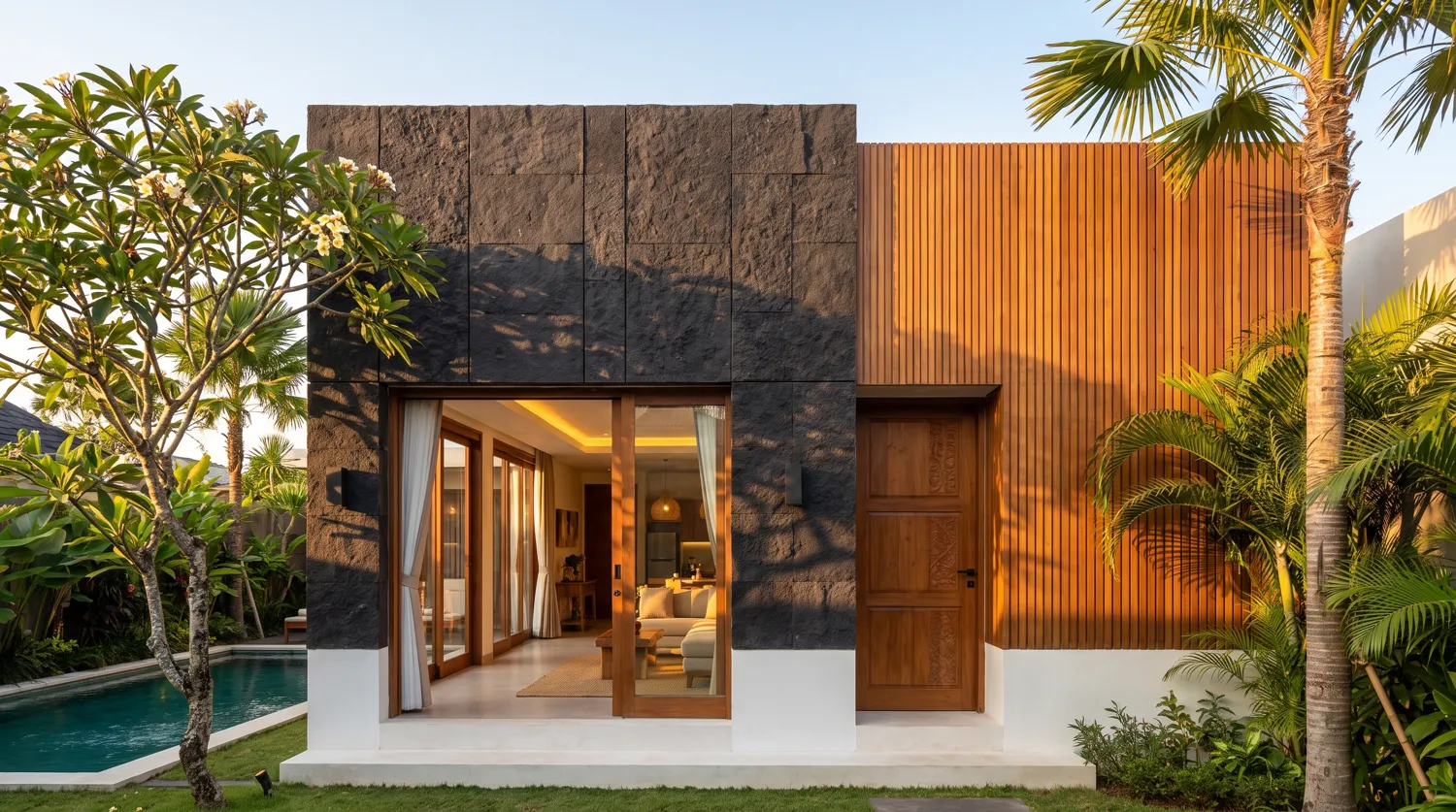
Renovate a facade without demolition: cladding over the old finish
When thin cladding can go over existing render, paint or tile, how to check the old wall first, and how to refresh a villa or hotel facade with less waste and downtime.
Why tear it all off?
The traditional facade renovation starts with demolition: chip off the old render, remove tiles, haul away rubble, then rebuild. That means noise, dust, skip bins, a lot of labour days and, for hotels and rental villas, lost bookings. In many cases the old wall underneath is perfectly sound. What failed is the surface, which is stained, faded, cracked in places or simply out of style.
Overcladding means putting a new finish on top of the existing one. With a thin, light material, it becomes a realistic option, because the new layer adds almost no weight and almost no thickness.
Why thin and light cladding suits overcladding
Flexible ceramic is a 3-5 mm sheet weighing 4-7 kg/m². It glues to almost any flat or curved base: concrete, brick, plaster, drywall, plywood, OSB and autoclaved concrete. There is no heavy sub-frame and no wet work, so the following problems of thick or heavy overcladding largely disappear:
- no major loading on the existing wall or foundations;
- window and door reveals, sills and thresholds change by only a few millimetres;
- no need to extend roof edges, gutters or railings to cover thick build-up;
- no mortar, no tile saw and far less dust, because the sheet is cut with a knife.
Always confirm the details with your contractor or engineer for the actual wall. Thin does not mean any wall will do.
First, inspect the old wall honestly
The new cladding is only as good as the surface it is stuck to. Before you decide to keep the old finish, check:
- Is it firmly attached? Tap the render and tiles with a hard object. A hollow sound means the layer has separated from the wall.
- Are the cracks active? Hairline cracks that have stopped moving can be repaired. Cracks that keep growing signal movement or a structural cause that must be fixed first.
- Is the wall damp? Dark patches, efflorescence, peeling paint and mould show water is still entering. Find and stop the source before anything is glued over it.
- Is the surface contaminated? Algae, dust, oil and loose paint prevent adhesion and must be cleaned off.
- Is it flat enough? A thin sheet follows the surface beneath it, so big dips and bumps will show unless you level them.
Preparation steps for overcladding
- Remove everything loose: flaking paint, blown render, detached tiles.
- Repair cracks and holes with a suitable repair mortar and let it cure.
- Wash off algae and mould, then let the wall dry completely.
- Level major unevenness; fill missing sections.
- Prime or treat the surface as the adhesive supplier requires, especially glossy tiles and painted surfaces.
- Do a trial patch in an inconspicuous area and check adhesion after the adhesive has cured.
The adhesive matters as much as the panel. Follow the manufacturer's recommendation for your substrate, and see our installation guide for the working sequence.
What can sit under the new cladding
| Existing finish | Can it be overclad? | Watch for |
|---|---|---|
| Sound cement render | Usually yes after cleaning | Hollow patches, cracks, damp |
| Painted walls | Yes if paint is firmly bonded | Flaking paint, glossy finish, chalking |
| Old ceramic tile | Possible if tiles are firm and clean | Loose tiles, glossy surface needing primer |
| Brick | Yes, once level and dry | Efflorescence, uneven joints |
| Failing render or active damp | No, not until repaired | Source of moisture, structural movement |
If the answer is "not until repaired", it is cheaper to repair first than to clad twice.
Savings and speed in practice
The benefit of overcladding is not a single saving but a sum of smaller ones: no demolition crew, no rubble removal, less dust and noise, shorter scaffold time and a quicker return to use. We do not quote percentages because they depend on the building, access and crew. What we can do is help you compare a demolish-and-rebuild plan with an overcladding plan on the same scope.
The same approach works for interior feature walls, reception areas and columns, and the material wraps around curves with no joints. For a villa facade, see flexible stone for villa facades.
Keeping a hotel or villa in use during the work
One of the real advantages of overcladding is that the building can often stay open. Phase the work by elevation, finishing one side before starting the next, so guests or tenants keep the other sides and the entrances. Because the sheet is cut with a knife, noise and dust stay low compared with chiselling off render or sawing tiles. Cover walkways and openings below the work area, agree working hours with the property manager and store material off the main routes.
Weather still sets the pace. Schedule the exterior work around dry spells, because adhesives and repairs need dry surfaces, and keep a plan for covering unfinished sections if a storm arrives.
When overcladding is the wrong answer
- The structure itself is cracking or settling.
- Water is entering from the roof, from a failed membrane or from the ground, and has not been stopped.
- The old layer cannot be made to stick, and no practical fix exists.
- The renovation requires thermal or acoustic upgrades that need a different build-up.
A short site visit or a set of photos and wall details is often enough for an honest answer. Send them through our contact page or WhatsApp.
FAQ
Can flexible ceramic be installed over old plaster or paint?
Yes, if the existing layer is sound, clean and firmly attached. It glues to concrete, brick, plaster and drywall without a heavy sub-frame. Loose or damp walls must be repaired first.
Can it go over old tiles?
Often yes, when the tiles are firm, clean and the surface is prepared as the adhesive manufacturer requires. Do a trial patch first.
How much does it add to wall thickness and weight?
The sheet is 3-5 mm thick and weighs 4-7 kg/m², plus the adhesive layer, so changes to reveals and loads are small.
Refreshing a villa, hotel or shop front? Send us photos of the wall on WhatsApp to request samples and a wholesale price list for overcladding.
Keep reading
Flexible ceramic vs natural stone
How the thin, bendable panel compares to real stone and porcelain tile.
Best facade materials for the tropics
What survives humidity, salt air and UV in Bali and across Indonesia.
Flexible stone for villa facades
A practical guide for villa developers and architects in Bali.
Get free samples and a project quote
Send us your project — we'll match the right finish, calculate cost and support installation.